 Skip to content
Under Texas Family Code rules, biology alone does not make a man the legal father. In Texas, legal parentage has to be established, and that one step can change conservatorship, possession, access, and child support in The Woodlands and Montgomery County.
That's why so many parents end up searching for a paternity lawyer The Woodlands TX after the easy part of the conversation is already over. The question is usually no longer, “Is he the biological father?” It's, “What happens now that the relationship is disputed, the child support issue is real, and the other parent may not be cooperating?”
In a place like Alden Bridge or Panther Creek, that can mean a parent is living with a child, paying informally, or trying to stay involved, only to find out there's no court order protecting that role. The law does not treat a handshake agreement the same way it treats a signed acknowledgment or a court judgment. Once parentage turns into a legal case, the details matter fast.
When a Woodlands Parent Actually Needs a Paternity Lawyer
A parent usually starts looking for help when the practical problems show up, not when the biology is still in question. In The Woodlands, that often means the other parent is blocking access, demanding support, talking about a move, or acting as if an informal understanding has already turned into a court order.
At that point, the lawyer's role is to turn a tense family situation into a clear legal plan. The attorney may help decide whether to file first, whether a voluntary acknowledgment fits the facts, whether a court case gives better protection, and how to protect your position on custody, possession, and child support while the case is pending.
Practical rule: do not wait for the other parent to sort it out if the dispute is already real. Timing often decides who has the better position.
The first days of the case usually involve gathering records, sorting out where the child is living, and deciding whether the case should focus only on parentage or also on conservatorship and support. That choice matters because Texas treats presumption, acknowledgment, and court order as different paths to legal fatherhood. The process at that point is less like a private disagreement and more like a file that has to be built the right way from the start.
A parent who is trying to protect a relationship with the child may also need to understand how paternity connects to parenting rights, not just to a name on a birth record. A local overview such as father custody rights in The Woodlands can help explain why parentage questions and possession questions often move together in Montgomery County.
If you want the broader picture of how local paternity cases are handled, Paternity Lawyer in The Woodlands is the kind of service parents in Montgomery County often look for when legal parentage and related rights need to be addressed in one case. That becomes more common when a family is already dealing with a contested relationship, a support dispute, or uncertainty about what the court will do next.
The key question is whether the situation has already moved past an informal arrangement. If it has, the rest of this guide should help you decide whether hiring a paternity lawyer is worth doing now, and what to look for if it is.
How Paternity Becomes Legal Parentage in Texas
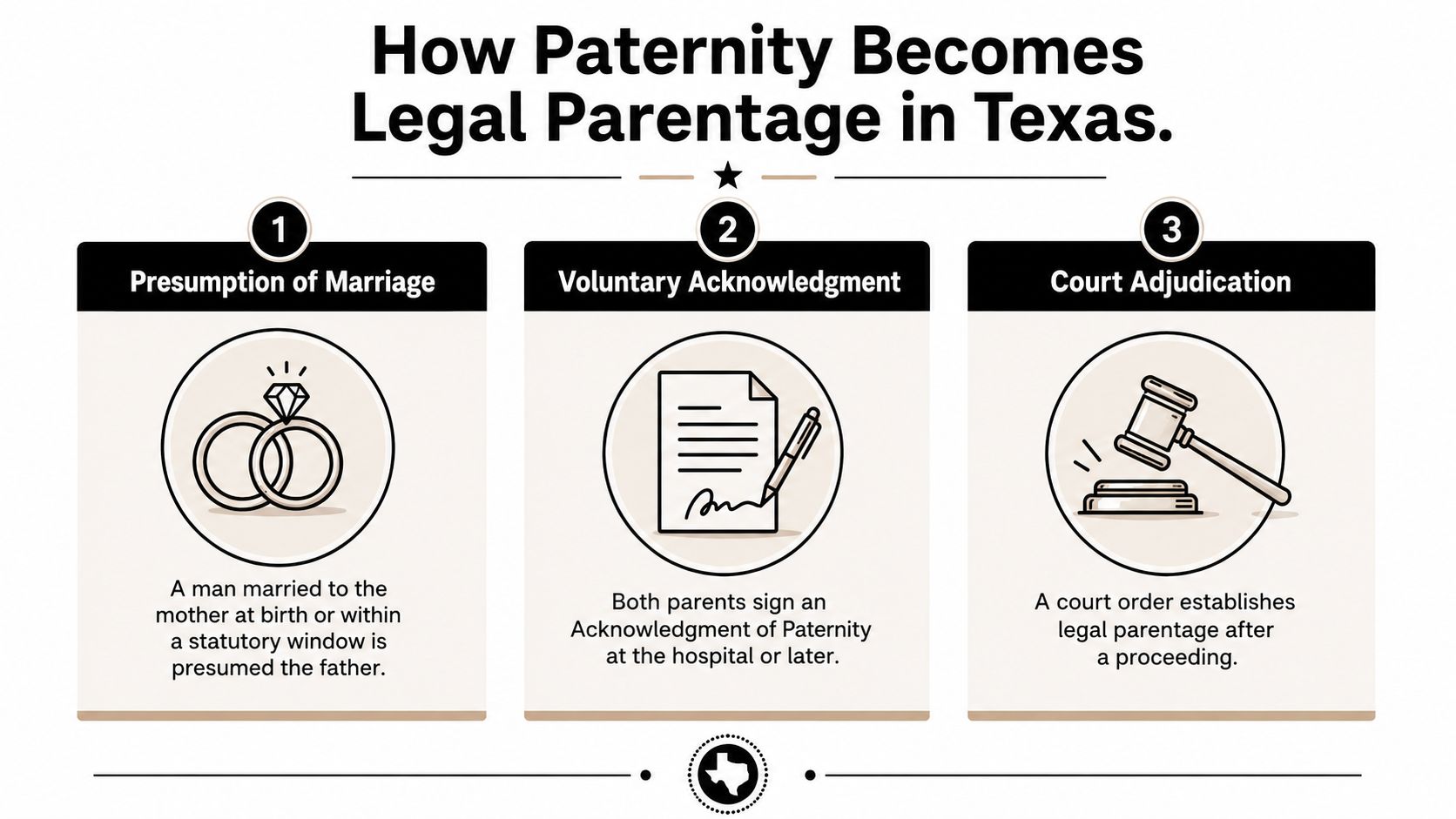
Texas gives a man three paths into legal fatherhood. The first is presumption, usually through marriage and birth timing. The second is a voluntary acknowledgment of paternity, which both parents sign and which can have the same legal effect as a court order. The third is a court adjudication, where a judge signs an order after a parentage proceeding.
A building permit offers a useful comparison. Biology is the foundation, while legal parentage functions like the permit that lets the court build the rest of the case. Without it, it is hard to put a reliable conservatorship order, possession schedule, or support order on top of the relationship.
The three legal doors
A man married to the mother at the relevant time may be presumed to be the father. If both parents agree and sign, an acknowledgment can establish parentage without a fight. If they do not agree, the court process becomes the path forward, often with DNA testing ordered under the Family Code.
An acknowledgment and a court order can look similar on paper, but they do not happen the same way in practice. In Montgomery County, an acknowledgment usually comes from both parents voluntarily signing the form, often before the dispute has hardened. A court order comes after a case is filed, service is completed, and a judge signs an order based on the evidence. For example, if parents sign an acknowledgment at the hospital or later while they still agree, the father may be legally established without waiting for a hearing. If one parent later refuses to cooperate, the other side may need to file in court so the judge can decide parentage and enter an order that can be enforced.
That is why practitioners in The Woodlands treat paternity as its own family-law action, not just a side issue inside custody. Parentage determines whether the court has a clear legal basis to address the rest.
The local product listing for Paternity Lawyer in The Woodlands is described as establishing legal paternity and related rights in Montgomery County, which matches how these cases work in practice. A lawyer may recommend the acknowledgment route when the facts are stable and everyone agrees, or a court filing when there is conflict, another presumed father, or uncertainty about service and deadlines.
Biology matters, but in Texas family court, paperwork and procedure decide what biology means legally.
If the wrong document gets signed too early, that can create problems later. If the case needs to be contested, the safer route is often to file first, preserve evidence, and let the court decide parentage the right way.
Montgomery County Court Procedure and Timeline
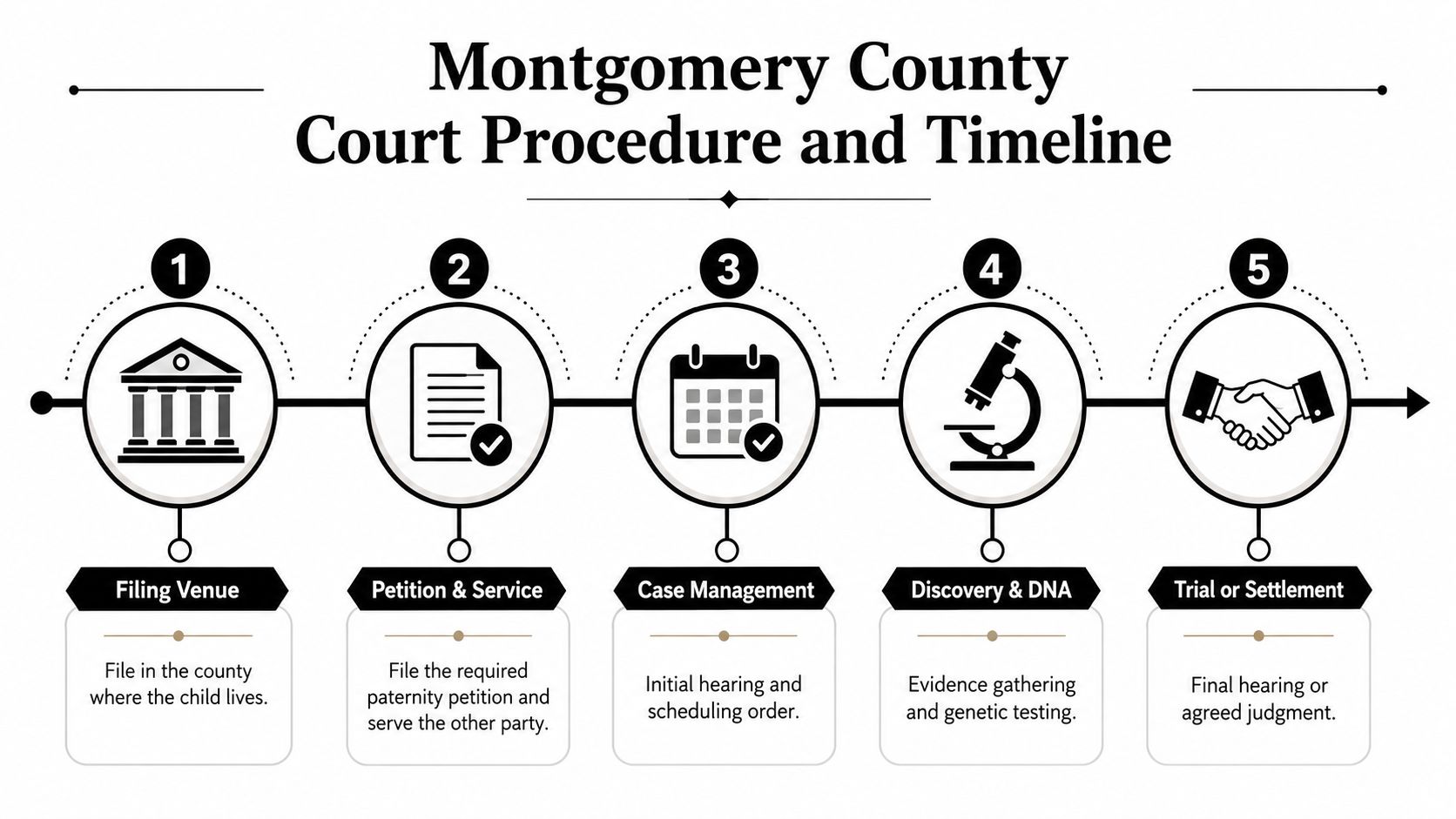
A paternity case in Montgomery County doesn't start with a dramatic hearing. It starts with filing in the county where the child lives, then serving the other parent with the petition. TexasLawHelp's parentage guide lays out that sequence and notes the waiting period before a default can be sought if the other side doesn't answer. TexasLawHelp parentage procedure is useful here because it shows that timing is part of the case, not a footnote.
What happens first
The early part of the case usually includes the petition, service, and an initial court setting. If the other parent answers, the case moves into scheduling and, when needed, DNA testing. If the other parent does nothing after proper service and the waiting period runs, a default path may be available, but only if the paperwork and service were done correctly.
Why local timing matters
Montgomery County family-law cases often overlap with custody and support disputes, so lawyers here pay close attention to documents, texts, emails, and witnesses from the start. Family-law guidance from local practitioners reflects that approach, because once a judge sets deadlines, the record you built early can shape the whole case.
The courthouse itself matters less than the filing discipline, but the local process still benefits from a lawyer who knows the county rhythm. If DNA is ordered through a court-approved lab, the testing step adds another layer of scheduling before final orders are entered. Uncontested matters move faster than contested ones, but the difference usually comes from cooperation, service, and whether the parties can agree on the facts.
How Parentage Changes Custody and Child Support Outcomes
Once parentage is established, the case stops being about uncertainty and starts being about legal rights and duties. A man who has been paying informally for two years may suddenly need to ask the court for a Standard Possession Order, a joint managing conservatorship role, and a support order tied to his actual net resources. A mother may be the one seeking support once parentage is confirmed, because the court usually cannot enter those orders with confidence until the legal father is identified.
The money side matters because Texas starts child support with guideline percentages that run from 20% of net resources for one child, 25% for two, 30% for three, and up to 40% for five or more children. A local overview of child support guidelines in Montgomery County helps show why parentage status can change monthly exposure by several percentage points. That is not a small detail when a parent is trying to budget for rent, groceries, and school costs while also figuring out time with a child.
| Texas Child Support Guideline Percentages by Number of Children | Percentage of Net Resources | Illustrative Monthly Obligation on $6,000 Net |
|---|---|---|
| One child | 20% | $1,200 |
| Two children | 25% | $1,500 |
| Three children | 30% | $1,800 |
A Woodlands parent looking for a Child Support Attorney in The Woodlands is often dealing with that overlap, establishing, modifying, or enforcing support in Montgomery County. Once parentage is adjudicated, the support question is no longer floating in the background. It becomes part of the court's order, and that order can affect every month after it is signed.
The timing problem nobody explains well
Timing changes the practical result because the court can only make possession and support orders after the legal parent-child relationship is in place. A parent who files early can get the issue in front of the court before the other side changes address, starts a new relationship, or begins acting as if the child belongs in a different household schedule. A parent who waits can still win on biology, but months of informal caregiving may already have passed without a clear order to match.
A Montgomery County example makes that easier to see. If a child has been living mostly with the mother in Conroe, and the father is later adjudicated as the legal parent, the judge can move from an informal pattern to a Standard Possession Order that sets weekend access, holiday rotation, and summer possession in writing. That written order gives both parents a rulebook the same way a school calendar does. Without parentage, there is no court-made rulebook to follow.
That is why paternity in Montgomery County is never just confirming biology. It changes who can ask for what, when they can ask for it, and how the court measures the next order.
DNA Testing, Evidence Preservation, and Building the File
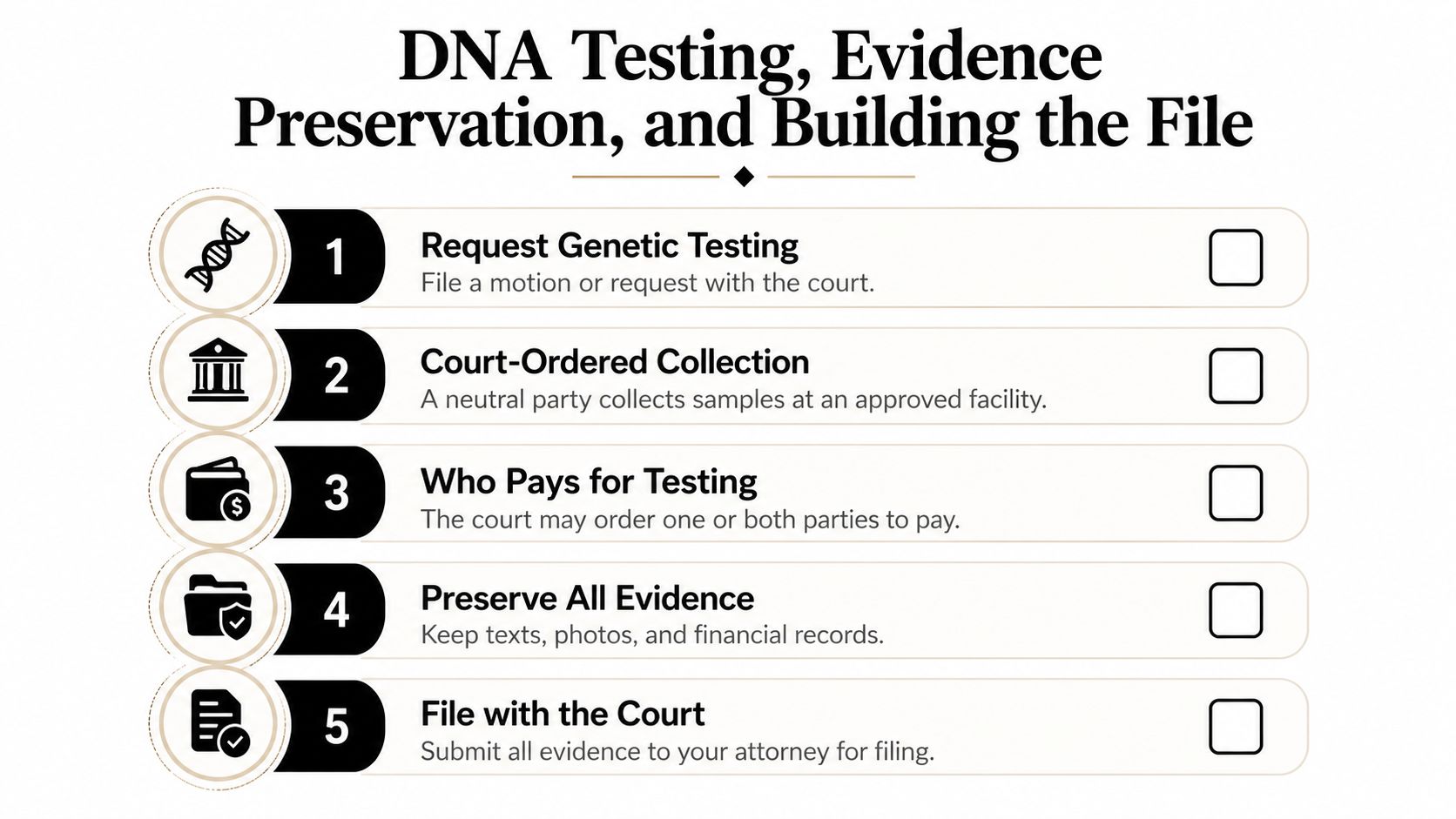
DNA testing gets the attention, but the file wins the case. Texas family court treats parentage as one of the most evidence-driven issues because the judge isn't just looking for a lab result, the judge is looking for a legally usable record. A test can be requested in the petition stage or through a motion, and the court can order collection through an approved facility.
What to save before the case hardens
Texts and emails matter because they show who said what, when, and whether the parties treated the child like a shared responsibility. Photographs with the child, school records, medical records, daycare sign-in logs, and witness statements from family or neighbors in The Woodlands can all help show the parenting history. If your case also overlaps with a broader custody record, a guide on evidence needed for child custody in Texas can help you think about what belongs in the file.
Don't delete the text thread because it feels messy. Messy messages are often better than no messages at all.
What not to do
Don't post about the dispute online. Don't edit screenshots. Don't assume a verbal agreement will carry itself into court later. A parent who keeps the record clean gives the lawyer more room to argue for possession, support, or enforcement without fighting avoidable credibility problems.
The local reality is simple, too. Paternity disputes in The Woodlands often overlap with custody, visitation, support, and enforcement, so lawyers here tend to push early evidence preservation instead of waiting to see what happens. That approach also helps if the case is heading toward an uncontested resolution, because even an Uncontested Divorce in The Woodlands style of cooperative process still depends on accurate documents and a clean record.
The best file is the one that tells the story without forcing the judge to guess.
Typical Costs, Retainers, and What the First Consultation Covers
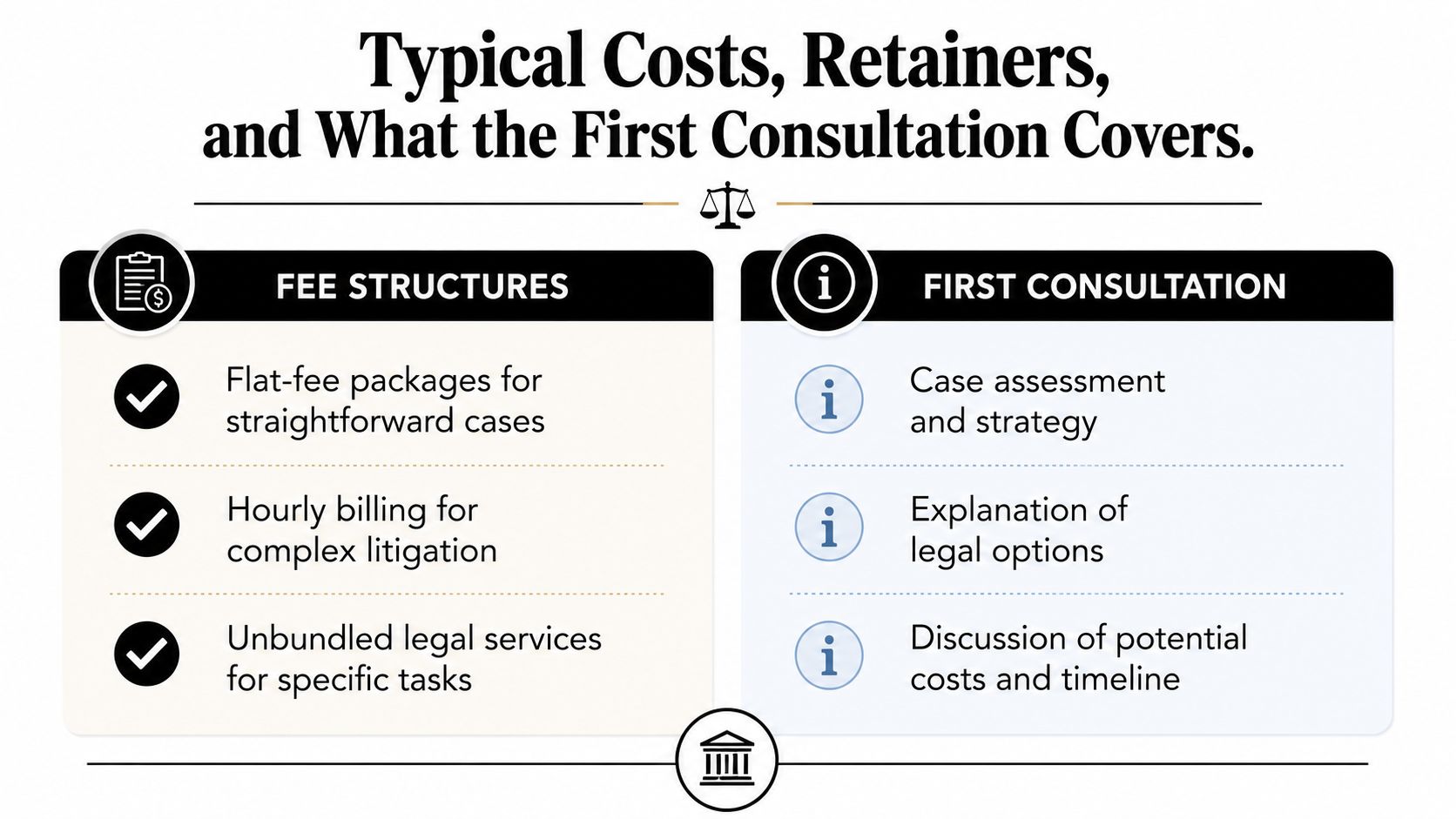
Paternity cases in The Woodlands usually fall into a few fee structures. An uncontested acknowledgment may fit a limited-scope or flat-fee arrangement. A contested court action usually fits hourly billing. Longer disputes can lead to a hybrid retainer setup, where part of the work is covered up front and the rest is billed as the case develops.
What a solid consultation should cover
A careful first meeting should review any existing court orders, identify the proper venue, and discuss likely outcomes clearly. It should also make clear what the fee agreement covers and what it doesn't. If the lawyer can't explain the next legal step in plain English, that's a bad sign.
The reason fee structure matters is simple. The cheapest lawyer is not always the least expensive if a missed deadline, bad service, or unclear agreement forces you to redo the case. In a market with offices clustered around Sawdust Road, Timberloch Place, Technology Forest Place, and High Timbers Drive, parents in The Woodlands do have multiple local options to compare, so asking good questions is part of the process.
The Texas Family Code and local parentage rules make paternity a procedural case as much as a factual one, which means the consultation should tell you whether your case is ready to file now or needs more groundwork first. If the lawyer gives you a plan, it should include the likely venue, the paperwork trail, and a candid read on whether negotiation, acknowledgment, or court action is the smarter path.
The value question isn't just what the lawyer charges. It's whether the lawyer keeps the case from getting more expensive later.
The Other Side of the Coin When Paternity Is the Wrong First Move
A Woodlands parent can walk into a paternity dispute thinking the first filing should be simple, then learn the local file is already shaped by an earlier legal label. If a presumed father is already on the birth record, or if a signed acknowledgment has already been filed, the courthouse does not treat the case like a blank page. In Montgomery County, that can change the path before anyone even gets to DNA.
Paternity also changes things in a practical way. It can confirm parentage, but it can also set in motion support duties, conservatorship questions, and service deadlines that are hard to undo once the case is on file. A lawyer who understands the sequence can help a parent choose the step that protects the case instead of making it harder to control later.
When the first move should be different
If there are already orders in place, a new paternity filing may run straight into existing conservatorship or child support language. That is one reason the right first move is often not a fresh parentage case at all, but a request for temporary orders in an existing SAPCR, a negotiated acknowledgment, or a careful response after counsel reviews the file. The right path depends on what has already been signed, filed, or ordered.
A concrete example comes up often in Montgomery County. If the birth certificate lists a presumed father, the clerk's file and the existing legal presumption can block a new paternity case from working like a clean reset. The parent trying to file may discover that the court is not starting from zero, because the record already points to another man as the legal father until that issue is dealt with first. That is where timing matters, because the wrong filing can put a parent in a procedural tangle before the dispute is even addressed.
If the parties are still talking, a negotiated acknowledgment may solve the issue, but only if no competing presumed father problem exists. If the respondent is likely to ignore service, default rules can change the advantage in a serious way, which is why the filing and service plan should be chosen with care. Texas procedure rewards the party who gets the paperwork right, not the one who moves fastest.
A paternity case is not just a DNA question. It is a procedural case, and in a Woodlands matter the legal path can matter as much as the underlying facts.
The right first move protects the order you need, not the one that simply feels decisive today.
What to Do Next and Choosing the Right Local Lawyer
Before any consultation, gather the child's birth certificate, photo IDs, any existing court orders, key texts and emails, a list of dates and witnesses, and a rough budget for fees. Bring those items to the meeting so the lawyer can tell quickly whether the case is ready to file, needs more evidence, or should be handled another way.
Ask direct questions. How many Montgomery County parentage cases have they handled in the past year? Do they appear regularly in the local family courts? Are they comfortable negotiating, drafting, and trying the case if needed? Those questions matter more than a glossy website.
If you live in Panther Creek, Alden Bridge, Sterling Ridge, or Creekside, local familiarity can help, because family-law disputes here often turn on courthouse habits, not just legal theory. The Law Office of Bryan Fagan works with Montgomery County families on paternity, custody, child support, and related family-law matters, so scheduling a consultation can be a practical next step if your situation is already getting tense.
This article is general information, not legal advice. Texas outcomes turn on the specific facts, the Texas Family Code, and in some cases probate issues under the Texas Estates Code.
If you're dealing with a paternity issue in The Woodlands or anywhere in Montgomery County, the safest next step is to get a real case review before you sign anything or miss a deadline. Visit The Law Office of Bryan Fagan to schedule a consultation and talk through your options for parentage, custody, and child support with a local family-law team.
