
The Woodlands residents must file probate at the Montgomery County Clerk's office in Conroe, at 210 W Davis St, Suite 300, not at a local Woodlands branch. Texas venue rules generally tie the filing to the decedent's county of domicile, and The Woodlands is primarily in Montgomery County.
That answer often comes at a difficult moment. A family may have a will, a death certificate, and urgent questions about a home, bank accounts, or other property, yet no probate counter exists in The Woodlands itself. The courthouse is in Conroe, roughly 18 miles north on I-45 for the area's residents. Knowing that before preparing the application can prevent a trip to the wrong office and help the family protect the original will during the first few days.
Confirming Venue and Jurisdiction for The Woodlands
A Woodlands family may reasonably assume that estate paperwork can be handled at a nearby municipal office or a Harris County location. Probate doesn't work that way. The relevant question is where the decedent had a domicile or fixed place of residence, not which courthouse is most convenient.
Texas Estates Code Chapter 33 places venue for admitting a will to probate or requesting letters testamentary or administration in the county where a Texas decedent resided. For most residents of The Woodlands, that means Montgomery County, with filings routed through the county's probate system in Conroe. The Texas Estates Code venue provisions describe the county-based rules and the alternative rules that may apply when a person didn't have a Texas domicile.
Practical rule: Confirm the decedent's actual residence before completing the application. A mailing address, second home, or recent hospital location may not establish probate venue by itself.
The Woodlands is primarily in Montgomery County, so most local estates aren't filed in a Woodlands office or a generic Houston-area courthouse. A neutral local probate resource identifies the Montgomery County courthouse in Conroe as the filing location for Woodlands residents and places it about 18 miles north on I-45. The county's statutory probate court handles probate jurisdiction for the county. Local guidance on The Woodlands probate filing location provides that practical orientation.
Before filing, gather documents that help establish residence, such as the decedent's address and records showing where the person lived at death. If the decedent moved recently, owned homes in multiple counties, or spent substantial time outside Texas, venue deserves careful review rather than an assumption based on the family's current address. The Montgomery County probate court process can help families understand how the county system fits into the larger Texas process.
Navigating the Conroe Filing Location and E-Filing Rules
Once Montgomery County venue is established, the next problem is operational. Probate filings for The Woodlands area go through the Montgomery County Clerk's office, located at 210 W Davis St, Suite 300, Conroe, TX 77301. Court-adjacent guidance generally reports office hours as Monday through Friday, 8:00 a.m. to 5:00 p.m. The Montgomery County probate court information identifies the local probate setting and the location families need to use.
Attorneys in Texas county and district courts, including probate matters, must use electronic filing. The Texas e-filing system explains the statewide electronic filing framework. Families should distinguish between submitting an application electronically and delivering original paper documents. Those are related steps, but they aren't interchangeable.
Montgomery County guidance requires the original will to be filed with the clerk within three days of electronic application submission. In practical terms, the family has a short 72-hour period to coordinate the electronic filing with physical delivery or acceptance of the original will. A family that submits the application late in the day, then waits to arrange delivery, may create avoidable processing problems.
A workable approach is to identify the original will first, confirm who controls it, and decide how it will reach the clerk before the application is submitted. If an attorney is filing, the attorney's office should coordinate the electronic submission and original-will delivery as one task, not as separate errands.
Families may also need advice about related family-status questions. For example, a Paternity Lawyer in The Woodlands addresses establishing legal paternity and related rights in Montgomery County, which can affect how heirs or interested persons are identified in some estate situations. That issue is separate from the filing location, but it can become important when family relationships aren't fully documented.
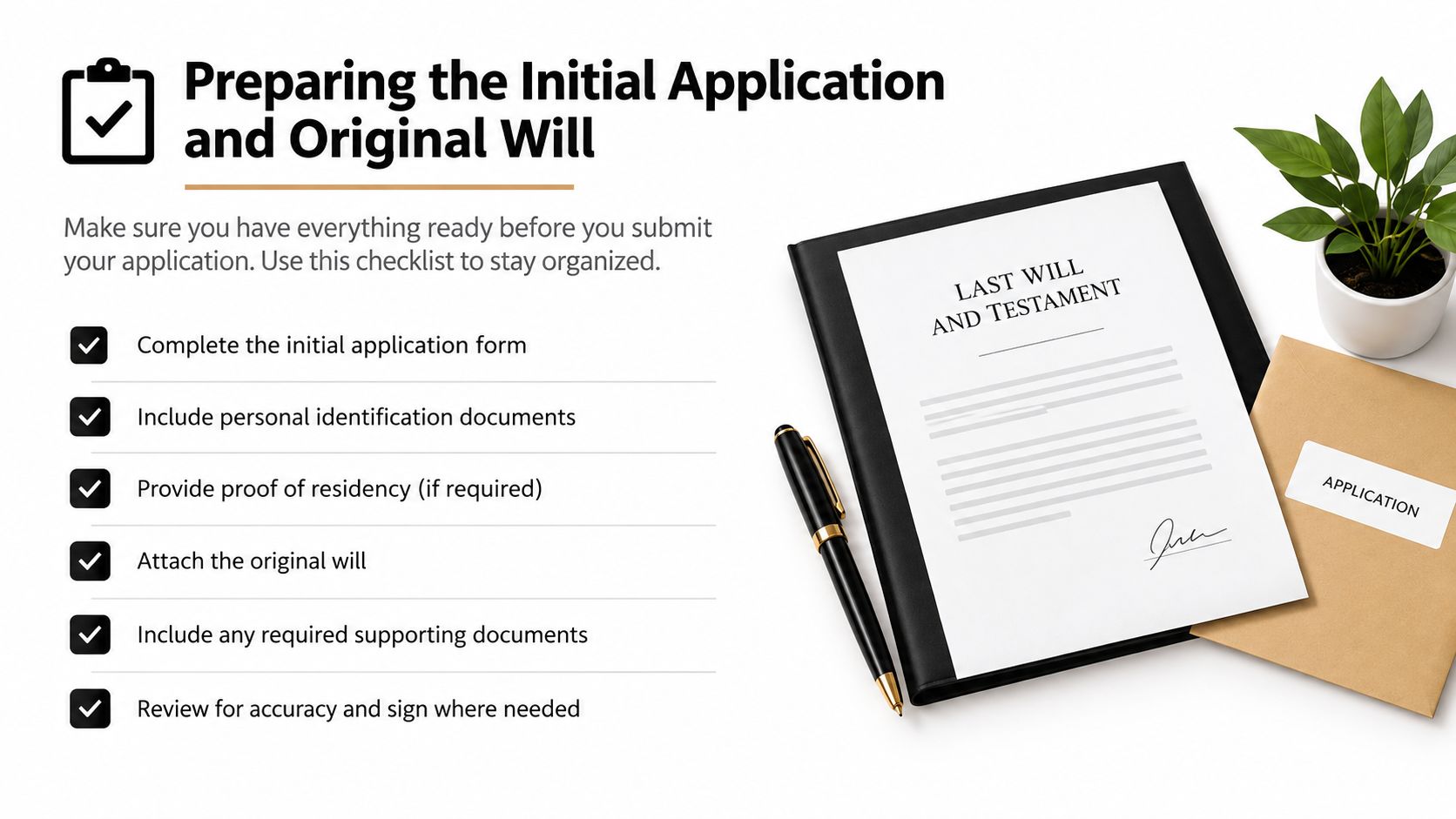
Preparing the Initial Application and Original Will
A signed will does not begin a probate case by itself. The applicant must file an application for probate or an application for letters, depending on the estate and the authority requested. If the applicant controls the will, Texas Estates Code Chapter 256 generally requires the original to be filed with the application. The Texas Estates Code Chapter 256 requirements explain that document-handling obligation. For a step-by-step overview, review how to probate a will in The Woodlands before assembling the filing packet.
A Woodlands resident may find the decedent's signed original will in a home office, have the death certificate, and know who should serve as executor. Those items alone do not open the estate. The application must identify the decedent, establish the basis for probate, state the authority requested, and give the court enough information to evaluate the filing. Because the clerk's office is in Conroe, a family should resolve missing information before making the trip.
Organizing the filing packet
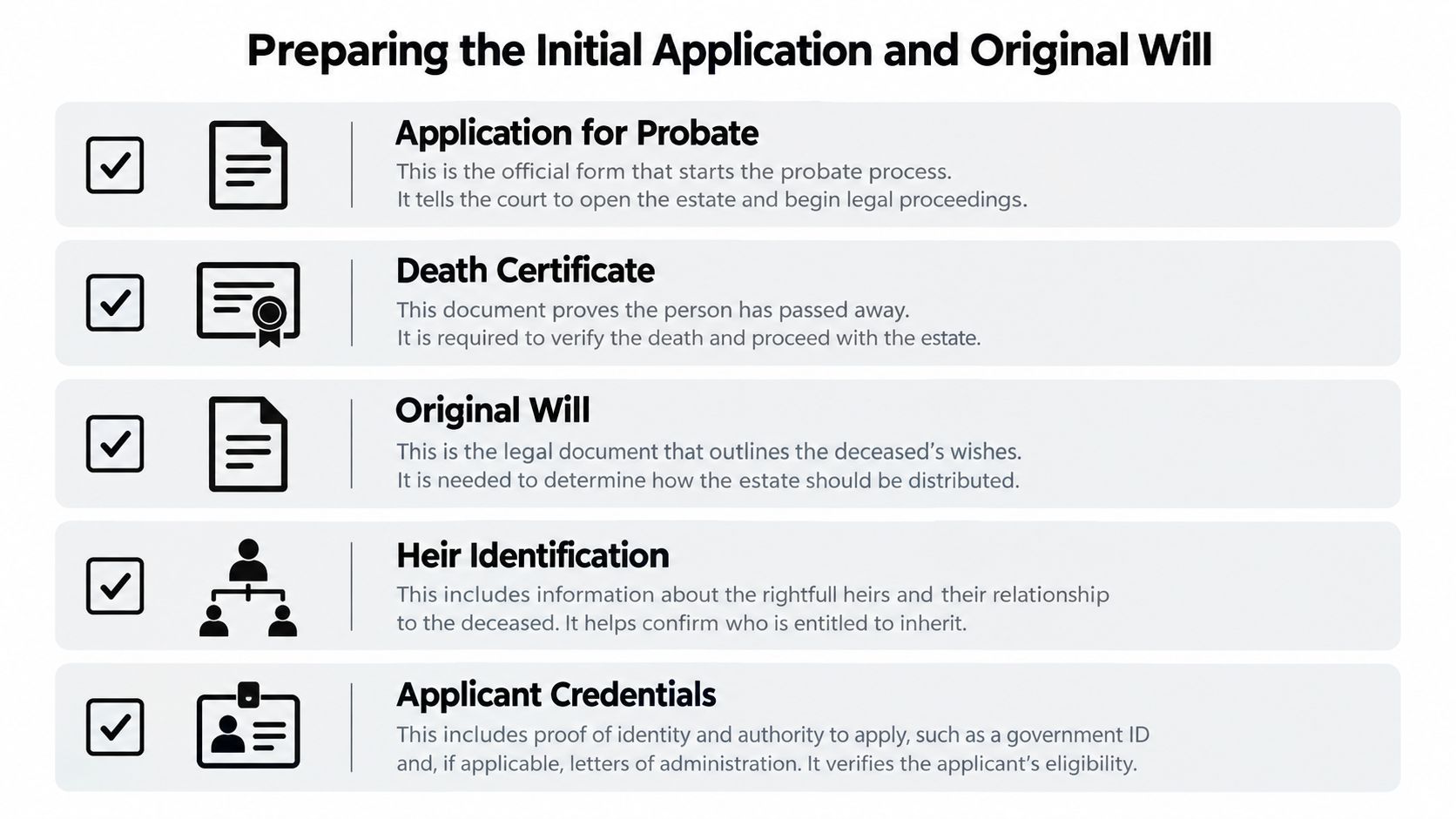
The documents vary by proceeding, but a practical review usually covers:
- Application information: Prepare the petition or application asking the Montgomery County court to act. The filing, rather than the will alone, starts the case.
- Original will: Keep the signed original secure and coordinate its delivery to the clerk after electronic submission.
- Death documentation: Have the death certificate available for filing and later administration tasks.
- Heir and family information: Gather names and contact details for people who may have an interest in the estate.
- Applicant credentials: Confirm the proposed executor's or administrator's identity and relationship to the decedent.
Montgomery County local probate rules provide that probate cases go first to the County Clerk's office, then are assigned to the county courts at law on a rotating basis. Families therefore cannot select a preferred courtroom. The clerk accepts the filing, and the assignment process determines which court handles the case. The Texas courts' local probate rules record describes that filing and assignment structure.
A Probate Lawyer in The Woodlands, TX can review whether the application matches the will, whether the original is available, and whether the applicant has supplied enough information for clerk processing. That review can save an unnecessary trip from The Woodlands to Conroe, particularly when a missing detail would require correction and refiling. Even a routine estate benefits from checking the packet before submission.
Understanding the Statutory Probate Court Structure
Montgomery County's probate structure matters most when an estate involves more than routine administration. Texas Government Code section 25.1721 establishes Montgomery County's sole statutory probate court, Probate Court No. 1, created by statute in 1987. The statutory provision establishing the court and related state law describe the court's authority.
The court has concurrent jurisdiction with a district court over disputes involving constructive trusts, declaratory judgments, injunctions, and receiverships. State law also gives it eminent-domain jurisdiction for Chapter 21 condemnation matters filed and docketed there. Those powers go beyond the basic task of admitting a will or appointing an executor.
Why expanded jurisdiction changes estate strategy
Suppose an estate includes a closely held business, disputed ownership, or allegations that property should be held in a constructive trust. The personal representative may need probate authority and related civil relief. A court with concurrent jurisdiction over several connected matters can reduce the need to divide the dispute among separate court systems.
That doesn't mean every complex estate will proceed without disagreement. It does mean the court structure can be significant when counsel evaluates where related claims belong and how to protect estate property while the dispute is pending. The expanded jurisdiction can be especially relevant for high-asset or contested estates, where separate proceedings may increase procedural complexity.
Montgomery County also maintains local probate rules and rules of administration for probate cases. State law authorizes the statutory probate court to conduct docket matters at locations within the county when necessary, so the filing county remains Montgomery County even though the exact courtroom or docket setting can depend on assignment and local procedure. Families should rely on the assigned court's current instructions rather than assume that every hearing will follow the same format.
Real-World Filing Scenarios and Immediate Next Steps
A family in Sterling Ridge learns that a parent who lived in The Woodlands has died and left an original will at home. One sibling assumes the family can file nearby, while another plans to send the application electronically and deal with the paper will later. The first sibling confirms the venue is Montgomery County, and the family arranges the Conroe filing location before submitting anything electronically.
That coordination matters because the original will must reach the clerk within three days after electronic application submission. The family also checks the decedent's domicile, identifies the proposed executor, and keeps copies of everything delivered. The drive to Conroe is inconvenient during a period of grief, but making the trip or arranging compliant delivery is less risky than treating the physical will as an afterthought.
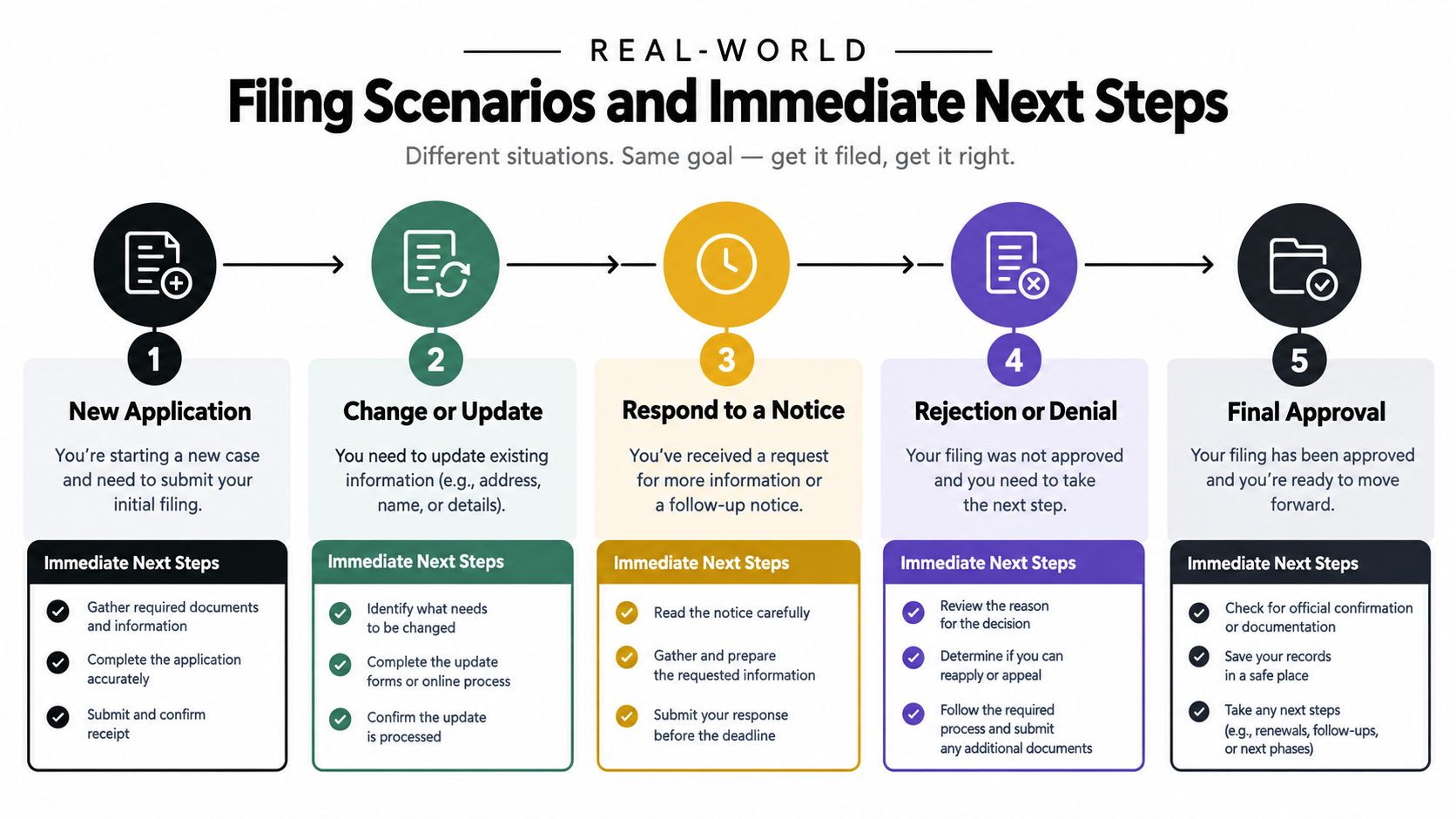
What to do next
- Secure the original will: Don't mark, alter, or casually mail the signed original. Identify who has possession and plan its delivery to the clerk.
- Verify domicile: Confirm that the decedent's fixed Texas residence was in Montgomery County. If residence is disputed or unclear, obtain legal guidance before filing.
- Prepare the application: Gather the death certificate, family information, proposed fiduciary's identification, and details about property and debts.
- Coordinate e-filing and delivery: If an attorney submits the application electronically, track the submission date and arrange original-will delivery within the county's three-day requirement.
- Contact the clerk: Confirm current intake instructions, accepted delivery methods, and any local procedural requirements before traveling to 210 W Davis St.
- Evaluate legal support: Consider whether the estate includes disputes, real property, business interests, unclear heirs, or a damaged or missing will.
An Estate Planning Attorney in The Woodlands can also address wills, trusts, and estate plans for The Woodlands families before a probate filing becomes necessary. For an estate already in progress, the immediate priority is accurate venue, a complete application, and proper handling of the original will.
Moving Forward with Local Legal Support
The filing location is clear, but probate administration can become technical quickly. A family may begin with an uncontested will and later face questions about heirship, creditor claims, property ownership, fiduciary authority, or related civil litigation. Local procedure also matters because the County Clerk receives the filing, the case is assigned through the county system, and the assigned court controls later steps.
A probate attorney in The Woodlands can help evaluate venue, organize the application, coordinate original-will delivery, and prepare the personal representative for the next stage of administration. Legal support is particularly useful when the decedent had multiple residences, the will's validity is questioned, or family members disagree about who should serve.
Disclaimer: This article is for general educational information only and is not legal advice. It doesn't create an attorney-client relationship, and the correct probate procedure depends on the facts, documents, and current Montgomery County requirements in a particular estate.
If you're handling a Woodlands estate and want help confirming the Conroe filing process, The Law Office of Bryan Fagan offers guidance on probate filings, estate administration, and related Montgomery County court matters. Schedule a consultation through The Law Office of Bryan Fagan to discuss the decedent's residence, original will, and the next practical step.