 Skip to content

The mortgage payment is coming due, the dock needs attention, and you and your spouse are discussing divorce. One of you wants to keep the Lake Conroe home. The other wants their equity out without spending another season paying for a property they no longer use.
For homeowners in The Woodlands and Montgomery County, Lake Conroe waterfront property division in a divorce is as much a money-tracing and carrying-cost problem as an ownership dispute. Before agreeing to a buyout or listing the house, you need to know where the purchase money came from, what the waterfront features are worth, and whether either household can afford to keep it.
Why a Lake Conroe Home Is Not Split 50/50
Consider this hypothetical scenario: Maria and James married in The Woodlands in 2011 and bought a Lake Conroe waterfront home in 2019. James used savings accumulated before the wedding for the down payment, and they paid the mortgage from a joint account for six years. Now James says the house is his because he supplied the initial money, while Maria expects half the equity.
Neither position answers the whole question. Under Texas Family Code Section 7.001, the court divides the marital estate in a manner it considers just and right, considering each spouse's rights and any children of the marriage, rather than automatically dividing the house 50/50.
Ownership comes before the division
The starting point is whether the house is community property, separate property, or involves both interests. A purchase during marriage generally belongs in the community-property analysis, but documented separate funds can change the result.
James's contribution needs a bank trail, not just his recollection. Maria's position also requires more than adding up every mortgage payment, because principal, interest, taxes, and insurance aren't interchangeable accounting entries.
Practical rule: Don't negotiate a percentage of the house until you know what property interests and financial claims you're negotiating.
The house is part of a larger settlement
Keeping the home doesn't necessarily mean receiving more of the overall estate. A spouse might receive the residence while the other receives cash, retirement interests, other property, or an enforceable payment arrangement.
The useful sequence is to trace the money, value the waterfront features, compare division options, establish interim responsibilities, and prepare a settlement that can be carried out. Your first move is straightforward: gather the deed, complete loan file, and bank records before discussing who keeps the house.
Separate and Community Money in the Lake House
Texas presumes property possessed at divorce is community property, and Texas Family Code Chapter 3 defines community property in Section 3.002 while addressing separate-property characterization and the evidence needed to establish it. The spouse asserting separate ownership must trace that claim with records.
For a lake house, that means following money through accounts, closing, mortgage payments, and improvements. A deed bearing one spouse's name doesn't replace that work.

How common funding sources are usually treated
| Funding source | Likely treatment | Evidence to keep |
|---|---|---|
| Down payment saved before marriage | Separate claim if traced to its source | Bank statements from before the wedding |
| Mortgage principal paid from wages during marriage | Community contribution; may support reimbursement | Loan history and payment records |
| Inheritance or gift used for principal reduction | Separate funds if traced; the resulting claim requires analysis | Estate or gift records and deposit trail |
| Renovations or dock work paid with community funds | Community investment; may support reimbursement | Invoices, permits and bank records |
| Home-equity loan or refinance proceeds | Analyze the debt obligation, use of proceeds, and benefited property | Closing disclosures and stated loan purpose |
Say one spouse supplies $60,000 from premarital savings, while $200,000 of mortgage principal is later paid from wages during marriage. Those are hypothetical contributions, not an ownership formula. The purchase documents, source of credit, timing, and movement of funds still matter.
Ownership and reimbursement aren't the same
An ownership interest concerns who owns the asset. A reimbursement claim concerns whether one marital estate should compensate another for a qualifying benefit.
Paying for work on a spouse's separate property doesn't automatically convert that property into community ownership. The Texas Supreme Court materials addressing tracing and reimbursement underscore why title and financial accounting require separate attention.
Build a tracing schedule with columns for the transaction date, amount, originating account, claimed character, use, and supporting document. Attach:
- Acquisition records: The closing statement and original financing documents.
- Source records: Pre-wedding statements and gift or inheritance documentation.
- Payment history: Loan records separating principal from other charges.
- Improvement records: Renovation invoices, dock permits, and proof of payment.
The same analysis applies when reviewing what is considered marital property. A deposit into a joint account deserves examination, not an automatic assumption that every dollar has the same character.
Keep appreciation separate from spending in the schedule. A higher market value isn't proof that a renovation produced the entire increase, and refinancing doesn't eliminate the need to trace the original acquisition. This organized accounting gives the appraiser and attorneys a usable foundation.
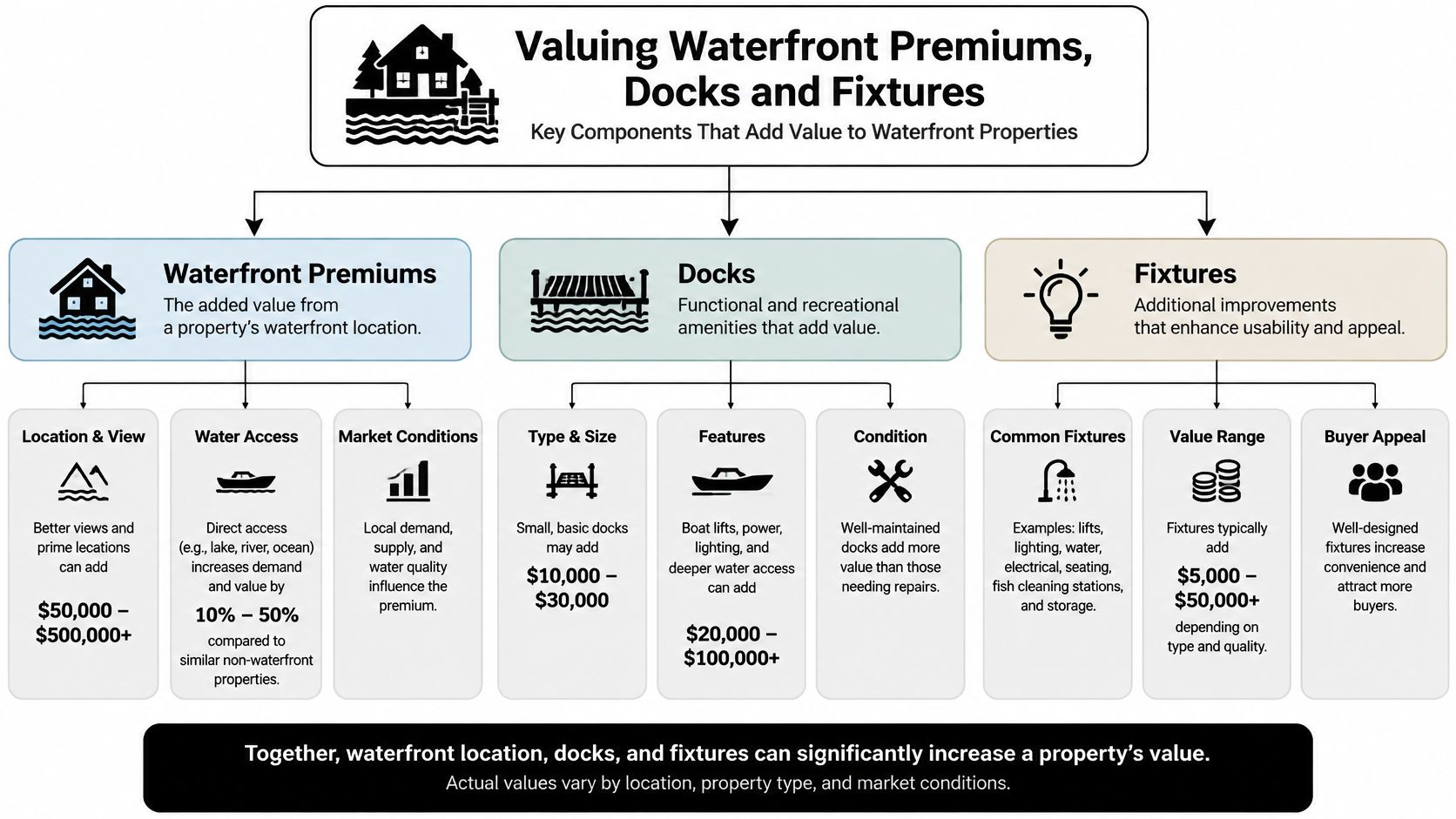
Valuing Waterfront Premiums, Docks and Fixtures
Use current market value as of an identified valuation date, not the county's tax figure. The Texas Comptroller's property-valuation guidance explains market-value appraisal for taxation, but a divorce buyout needs a valuation suited to the property and the transaction being negotiated.
Lake Conroe waterfront isn't a uniform category. The Texas Water Development Board's Lake Conroe information provides context for a reservoir where location, shoreline characteristics, and usable water access require property-specific analysis.
A canal property and an open-water property may appeal to different buyers. Even neighboring homes can differ in water depth, exposure, maintenance needs, and usable dock facilities.
Waterfront factors that change net equity
| Factor | Why it moves value | Proof to gather |
|---|---|---|
| Shoreline frontage and water exposure | Open-water and cove lots can sell at different prices | Recent comparable sales with shoreline length noted |
| Dock, boat lift and boathouse permits | Permitted improvements support value; unpermitted ones may not | Permit records and a dock inspection |
| Bulkhead or seawall condition | Necessary repairs affect the transaction's economics | Contractor or engineer estimate and photos |
| Flood zone designation | Affects insurance, financing and buyer demand | FEMA floodplain map check and an insurance quote |
| Mortgage, home-equity line and delinquent taxes | Reduce net equity before division | Payoff letters and tax statements |
| Sale costs if the home is listed | Commissions and closing costs reduce what is split | Listing agreement and estimated closing statement |
Request a licensed appraisal that explains adjustments to comparable waterfront sales. Ask the appraiser to identify the contribution of the dock and boathouse, separately where supportable, without counting those improvements twice.
Permit records deserve attention before settlement. Consider otherwise similar homes where one has a documented permitted dock and the other has unresolved permit questions. The second owner may face inspection, corrective-work, or marketability issues that a broad online estimate won't capture.
Turn market value into usable equity
Start with the appraisal, then assemble the mortgage payoff, home-equity balance, other secured obligations, and delinquent taxes. For a proposed sale, include estimated commissions, closing expenses, and approved repair costs.
Distinguish actual debts from proposed transaction expenses. A repair estimate isn't a lien, and hypothetical selling costs shouldn't become an automatic deduction in a buyout. Identify which deductions the spouses accept and which remain disputed.
An appraisal tells you what the property may sell for. It doesn't tell you how much cash either spouse will receive.
A review of Montgomery Central Appraisal District value in a divorce can help frame why a tax assessment alone may be inadequate.
Use compatible dates for the appraisal, payoff information, and tracing schedule. Otherwise, one spouse may negotiate using an older loan balance while the other relies on a newer market value, producing a misleading equalization figure.
Division Options for a Lake Conroe Waterfront Home
| Option | Best when | Main risk | When money changes hands |
|---|---|---|---|
| Keep the home and offset with cash or retirement assets | One spouse can refinance and wants to keep the lake home | Refinancing may fail, and retirement withdrawals can carry taxes and penalties | At the final decree or refinance closing, subject to transfer requirements |
| Keep the home and give a lien payable at sale | Cash is short but the house holds most of the equity | The lien can be hard to collect if values fall | When the home sells or refinances |
| Sell and split net proceeds | Neither spouse can carry the mortgage, taxes and insurance | Forced-sale pricing leaves less to divide, as discussed in the valuation analysis | After the sale closes |
| Buyout at agreed appraisal | Spouses agree on a current appraisal and the buyer can finance | Appraisal disputes can stall the case | After the appraisal and financing are complete |
| Deferred sale under court order | Waiting serves an agreed purpose, or a listing is already in progress | Carrying costs continue and the outcome stays uncertain | According to deadlines and the net-proceed formula in the final order |
The Texas Family Code's property-division provisions provide the framework for a just-and-right division and written agreements concerning property and liabilities. The practical task is choosing an arrangement that delivers the agreed economic result. For a waterfront home, that means testing the option against the full money trail: equity, financing, carrying costs, dock-related obligations, flood-zone exposure, and the net equity available for division.
Keeping the home without creating another dispute
A spouse who keeps the lake house needs more than a desire to stay. The monthly carrying-cost comparison comes first. Add the mortgage, taxes, flood and hazard insurance, utilities, association charges, repairs, and dock-related expenses, then compare that total with the retaining spouse's post-divorce income. If the numbers only work by delaying repairs, skipping insurance, or relying on future refinancing, the award carries a real risk of default.
Offsets can work when there is sufficient property outside the residence. Cash is immediately usable, while retirement assets may have different tax treatment, access restrictions, and transfer requirements. Don't treat their account balances as automatically interchangeable. A retirement asset that looks equal on a balance sheet may provide less spendable value after withdrawal rules and transfer mechanics are considered.
A lien can postpone the cash payment when most wealth is tied up in the house. The receiving spouse needs carefully drafted security, payment triggers, and default provisions. Waiting also means accepting collection and property-value risk. If the retaining spouse misses a payment, the lien holder may need a clear path to enforce it. If values fall, the sale proceeds may not cover the expected payoff.
An appraisal-based buyout works when the retaining spouse can obtain financing. Require a financing deadline and a backup sale procedure rather than an open-ended promise to refinance. Confirm the lender's requirements instead of assuming the divorce decree completes the loan changes. The decree can set rights between spouses, but the lender controls assumptions, refinancing, and payoff mechanics.
Selling now or setting a controlled later sale
An immediate sale converts the property into proceeds that can be distributed after approved expenses. It also ends the problem of funding two households while maintaining a lake house. The trade-off is control. A sale timed to a divorce can invite pricing pressure, and the amount available for division depends on the approved expenses and sale terms addressed in the valuation discussion.
A deferred sale needs more than a statement that the home will eventually be sold. Put the listing deadline, broker-selection process, price-reduction procedure, showing access, maintenance duties, and distribution formula in the final order. Waterfront homes add practical details that should be handled before they become disputes, including dock access during showings, insurance continuity, and who authorizes work after an inspection or storm-related damage claim.
The accounting should distinguish approved expenses from unilateral spending. Decide how a failed offer, repair request, or disagreement over price will be resolved. A vague “reasonable efforts” clause often leaves both spouses exposed: one wants a faster sale, while the other wants a higher price and more time.
Federal tax treatment also needs review. Transfers between spouses incident to divorce are generally nonrecognition transfers under IRC Section 1041, but a later sale, retirement withdrawal used for an offset, and eligibility for the home-sale gain exclusion raise separate questions for a tax adviser.
Before choosing any option, test whether the retaining spouse can afford the mortgage, taxes, insurance, and repairs after the settlement. If not, a sale may protect more financial stability than an unaffordable award.
Keeping the Lake Home Running During the Divorce
Temporary possession isn't final ownership. A spouse who remains in the lake house during the case hasn't necessarily won the property, and the spouse living elsewhere still needs clear financial and access arrangements.
Under Texas Family Code Chapter 5, a spouse generally can't sell, convey, or encumber the family homestead without the other spouse's joinder, whether the homestead is separate or community property. Don't assume sole title permits a unilateral refinance or conveyance, and obtain advice before signing listing documents.
Put the operating rules in writing
A workable temporary arrangement should address these responsibilities:
- Payment schedule: Assign the mortgage, property taxes, flood and hazard insurance, utilities, association charges, and dock-related expenses.
- Access rules: Identify who occupies the residence and when the other spouse can retrieve belongings or access boat storage.
- Insurance protection: Maintain appropriate coverage and confirm how each spouse's interest is identified with the insurer.
- Repair authority: Set an approval process for routine work and a notice procedure for emergency repairs.
- Financial restrictions: Address new liens, borrowing, rentals, and changes to existing service arrangements.
Specify who pays the provider directly and who receives statements. A promise to share expenses isn't enough if nobody knows whether the premium or mortgage installment was paid.
Record interim payments by date, source account, amount, and purpose. Those payments may become relevant to claimed credits, reimbursement, or the eventual division, but they don't automatically produce an equal repayment award.
Preserve the condition of the property
Photograph the home and waterfront improvements before disagreements develop over deterioration. Keep dated images of shoreline erosion, dock condition, storm damage, and deferred maintenance, together with inspection reports and repair estimates.
Create a boat and personal-property inventory that includes identifying information and photographs. Don't assume the boat, lift equipment, outdoor furniture, and house contents will all follow the property.
Before authorizing work: Separate an urgent repair that prevents further damage from an elective upgrade that changes the property during the case.
For additional discussion, the following video is available.
Negotiation, Litigation and Montgomery County Practice
Negotiation works best when the spouses can exchange reliable records and agree on the main inputs: property characterization, valuation, financing, and payment terms. A disputed dock adjustment can be negotiated. A missing bank trail or refusal to cooperate with a sale may require formal discovery or court involvement.
Mediation gives spouses room to compare solutions that a simple demand for the house misses. Keeping favorable financing may matter to one spouse, while the other values a prompt payment and release from ongoing obligations.

Use local sales without turning them into a shortcut
A local market check can test an assumption, but it can't replace the property appraisal. Sarah Conway Properties' April Sound market discussion reports MLS data showing 102 April Sound sales in 2025, with a median sold price of $158.70 per square foot.
That figure describes the reported April Sound sales, not a waterfront-only value for your residence. Multiplying it by your home's square footage wouldn't account for shoreline, permits, condition, or differences among the properties sold.
Use neighborhood information to ask better questions. Which closed sales resemble this property's water access? Did the comparable have a functional bulkhead, similar elevation, and a documented dock? Were concessions or repair issues relevant to its price?
Family cases in Montgomery County are heard in Conroe, the county seat. Prepare current appraisals and organized tracing schedules so the disputed issues are clear, rather than assuming a judge can reconstruct years of transactions from an unsorted stack of statements.
Know when an agreement needs court support
Consider seeking court intervention when:
- Appraisals conflict materially: The experts use different property assumptions or cannot reconcile comparable sales.
- Separate ownership is contested: A spouse withholds source records or disputes the acquisition history.
- A sale is obstructed: A spouse refuses access, won't cooperate with agreed listing terms, or delays required signatures.
- The asset is at risk: Insurance, necessary repairs, or loan payments aren't being addressed.
Litigation has trade-offs. Expert work and hearings consume resources, so identify what evidence could resolve the disagreement before spending heavily on competing positions. Sometimes the useful next step is a targeted document request or a joint inspection, not another settlement demand.
Our firm serves families throughout Panther Creek, Alden Bridge, and Sterling Ridge, as well as The Woodlands and the wider Montgomery County area. For spouses considering divorce mediation in The Woodlands, preparation should include a written proposal with actual implementation terms.
Put offers in writing, use a consistent valuation date, and attach a proposed order when the sale mechanics are disputed. A settlement should explain not only who receives the property, but what happens when financing fails, an offer arrives, or the spouses disagree about a necessary repair.
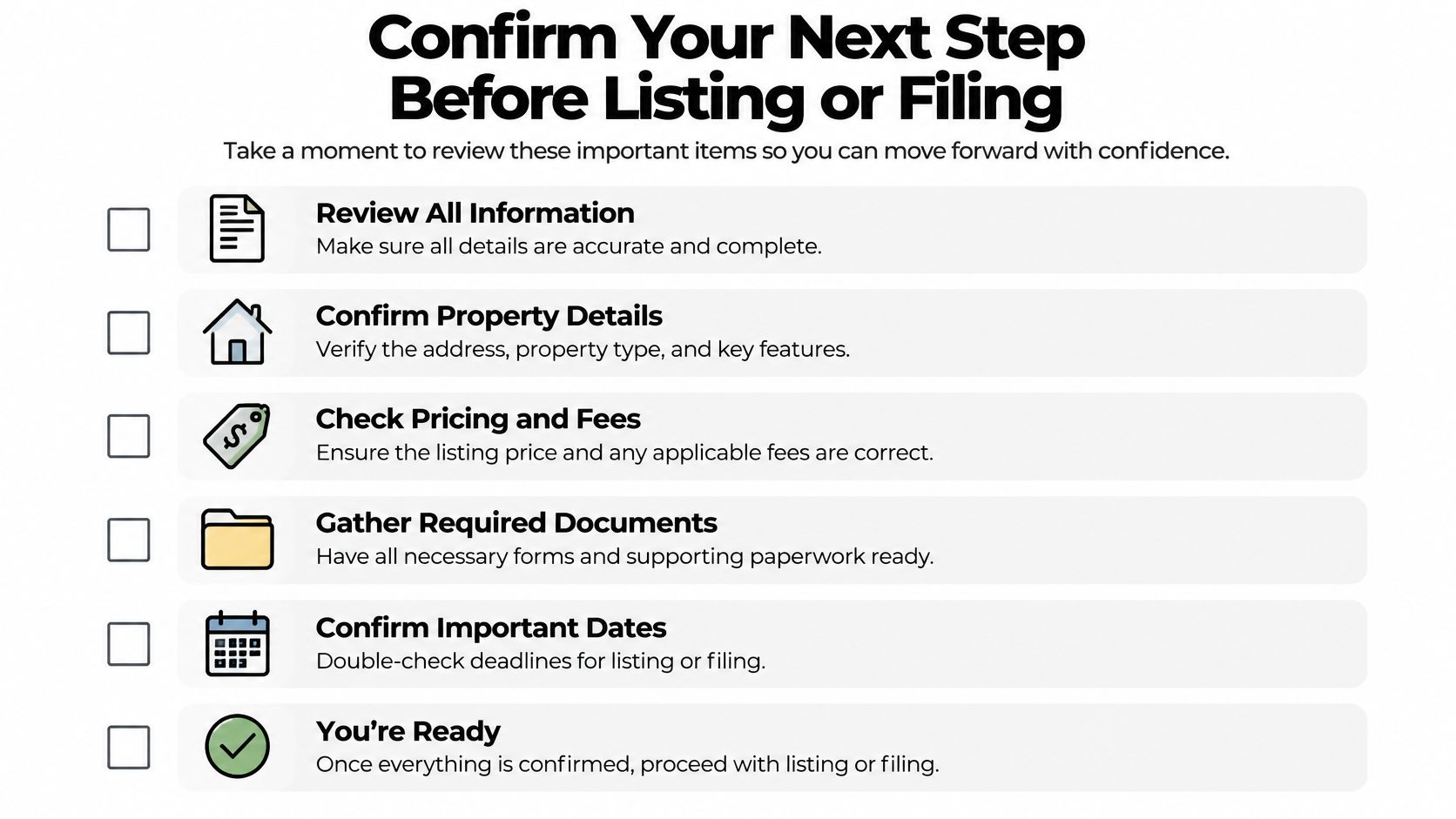
Confirm Your Next Step Before Listing or Filing
What to do next
- Pull the acquisition file: Gather the deed, closing statement, and original loan documents.
- Build the tracing schedule: Identify the source of every down payment, mortgage payment, and renovation expenditure.
- Arrange the valuation: Obtain a current appraisal with waterfront adjustments and a flood-zone check.
- Request payoff information: Get current letters for the mortgage and any home-equity line.
- Test the available choices: Compare keeping, buying out, and selling against the costs you can carry.
- Propose interim rules: Put payment duties, access, insurance, and repair procedures in writing.
You don't need a perfect file before asking for guidance. Bring what you have, identify what's missing, and distinguish confirmed facts from estimates. A bank statement showing the purchase transfer is more useful than a confident recollection of where the money originated.
For the affordability decision, prepare a household budget that includes ordinary living expenses as well as the lake property. Include maintenance reserves and insurance quotes rather than relying only on the current mortgage payment. Keeping the house should leave a workable financial life after divorce.
Prepare for a useful consultation
Bring your preferred outcome and a fallback. If you want to retain the property, explain how you expect to finance the payment to your spouse; if you prefer a sale, identify any obstacles to listing and showing it.
Also flag pending transactions, insurance notices, overdue obligations, and urgent repair concerns. Those issues may need attention before the larger property division can be resolved.
You can request a free consultation with The Law Office of Bryan Fagan by calling (281) 819-1726 or using the website contact form. During that consultation, we discuss your specific circumstances and outline your legal rights and options under Texas law.
This article provides general information, not legal advice. Texas outcomes depend on your specific facts, including the acquisition documents, available tracing evidence, property condition, and proposed settlement terms.
The Law Office of Bryan Fagan offers guidance on divorce and property division for families in The Woodlands and Montgomery County. When you're ready to discuss the records, carrying costs, and options for your Lake Conroe home, visit The Law Office of Bryan Fagan to schedule a consultation.
