 Skip to content
Crafting the right custody plan for your Woodlands family starts with a problem most parents know well. You're not just dividing days on a calendar. You're trying to decide where your child sleeps on school nights, who handles Thursday soccer in Spring ISD, and whether a handoff across The Woodlands Parkway will turn into a weekly argument.
Creating a child custody schedule can feel like one of the hardest parts of a Texas divorce or separation. For families in The Woodlands and Montgomery County, the target is usually the same. You want a plan that gives your child stability and gives both parents a workable routine. The hard part is that a schedule that looks fair on paper can fail fast once school, traffic, and work travel enter the picture.
There isn't one best answer. Some families do well with the default court framework. Others need a true equal-time plan, a school-centered calendar, or a step-up plan for a very young child. Under the Texas Family Code, courts focus on the child's best interest, and practical details matter more than slogans.
Below are seven custody schedule Texas example plans that come up often in Montgomery County. Each one can work. Each one can also go sideways if it's drafted loosely.
1. Standard Possession Order (SPO) and Texas Family Code § 153.312
The Standard Possession Order is still the baseline schedule in many Texas custody cases. If parents can't agree, courts often start here because Texas Family Code § 153.312 gives judges a familiar structure to work from.
For parents who live within 100 miles of each other, the noncustodial parent typically has the child on the 1st, 3rd, and 5th weekends of each month, a Thursday evening visit during the school year, about half of holidays, and summer possession. If the parents live farther apart, the schedule changes and summer time expands, as outlined in this Texas possession schedule overview.
When it works well in The Woodlands
This plan often fits parents with predictable work hours and children in a steady school routine. I see it work best when one parent lives near the child's school and both parents want fewer judgment calls.
It also works in high-conflict cases because the order answers basic questions before they become fights. If your exchanges tend to unravel, precision helps.
Practical rule: If you use an SPO, write down the exchange location, exchange time, and what happens if school is closed.
A common local example is a parent in Alden Bridge and another in nearby Spring. The weekday visit stays manageable, and weekend exchanges don't require long drives across multiple counties.
Drafting tips for Montgomery County orders
Use exact language, not assumptions. Don't write “reasonable pickup.” Write “pickup at the child's school when school is in session, and at Parent A's residence at a stated time when school is not in session.”
Short additions can prevent recurring disputes:
- Exchange point: Name a specific place in The Woodlands.
- School events: State whether possession changes for performances, games, or open house nights.
- Written notice: Require schedule changes to be confirmed in writing.
- Missed time: Say whether makeup time is allowed and how it's chosen.
If you're using the local default as a starting point, this guide on the Standard Possession Order in The Woodlands is the right companion piece.
2. Equal Time-Sharing Schedule (50/50 Custody)
A true equal-time arrangement can be a strong option when both parents are reliable, live close enough to school, and communicate without turning every detail into a contest. Texas courts don't require a 50/50 split, but parents often propose it because it keeps both households heavily involved.
Some common examples are the 2-2-3, 2-2-5-5, and week-on/week-off models. A 2-2-5-5 plan divides a 14-day cycle into two days with each parent and then five days with each parent, creating a 50/50 structure described here.

The trade-offs most parents underestimate
Equal time sounds simple. The logistics usually aren't.
A 2-2-3 schedule gives younger children frequent contact with both parents, but it also creates frequent exchanges. That can be rough if one parent works in Houston and doesn't get back to The Woodlands on time. Week-on/week-off reduces handoffs, but some younger children struggle with longer stretches away from one parent.
For families in Sterling Ridge, Panther Creek, or Creekside, commute time matters as much as goodwill. If one parent handles school drop-off in Tomball ISD and the other works early mornings, a paper-equal plan may create a real-world imbalance.
What to write into the order
A workable 50/50 plan usually needs more detail than an SPO.
- Duplicate essentials: Keep school supplies, medication basics, and clothes in both homes.
- Transition timing: Use school pickup and school drop-off when possible.
- Activity transport: Say who takes the child to practice, games, and lessons.
- Summer split: Draft summer separately if the school-year pattern won't fit camps or travel.
Parents who do 50/50 well usually run the schedule like a shared operations calendar, not a loose family promise.
For local parents considering equal time, this page on 50/50 custody in The Woodlands, Texas gives a useful next step.
3. Structured Parenting Plan With Detailed Visitation Schedule
Some families don't need a standard template. They need a rulebook.
That's especially true when one parent travels, a child has medical needs, or communication routinely breaks down. Under the Texas Family Code, parents can agree to terms beyond the default possession language, and courts often prefer a detailed order over an ambiguous one because it's easier to enforce.
What this looks like in practice
A strong custom plan usually covers possession, decision-making, notice requirements, travel, school records, extracurriculars, and dispute resolution. In Montgomery County, the more friction there is between parents, the more valuable those details become.
A parent who works downtown Houston, for example, may need exchange windows that account for real commute times. A child in a specialized therapy routine may need language assigning who schedules appointments and who gets notice.
Good custom drafting often includes language like this:
“If a regular exchange cannot occur because of school closure, illness, or severe weather, the parents will use the same exchange time at the designated backup location unless they agree in writing to another arrangement.”
That sentence won't solve every dispute. It does stop a lot of avoidable ones.
Sample drafting points that help
Use short, direct clauses.
- Medical notice: Require each parent to notify the other of non-routine appointments.
- School access: State that both parents receive school portals, teacher notices, and report information.
- Phone contact: Set reasonable call or video contact times.
- Modification method: Allow agreed written changes without rewriting the entire parenting plan.
I often tell parents in contested cases that “be reasonable” is not drafting. It's wishful thinking. A clearer order usually means fewer expensive returns to court.
If your case needs more than the default weekend framework, review this page on an expanded possession order in Montgomery County.
4. Bird's Nest Custody Arrangement
Bird's nest custody flips the usual model. The child stays in one home, and the parents rotate in and out based on the schedule.
It's not common, but it does come up in higher-asset cases and in short-term transition periods. For some families in The Woodlands, especially those trying to keep a child in one school zone without immediate disruption, it can be worth discussing.
Why parents consider it
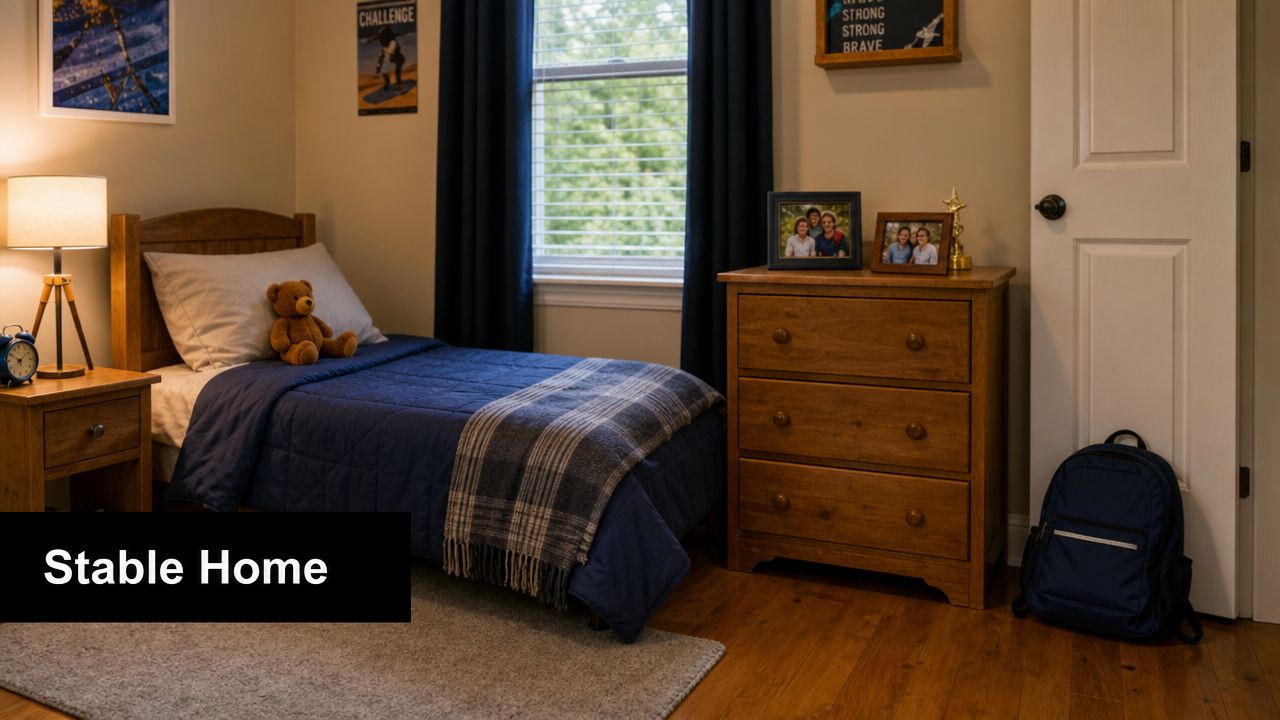
The main upside is stability for the child. The child keeps the same bedroom, school routine, and neighborhood rhythm while the adults handle the movement.
That can be appealing if your child is already under stress from the separation. It can also reduce school transportation problems when both parents live farther from campus than the family home.
Why it often breaks down
The adults need very strong boundaries. If parents can't agree on groceries, housekeeping, privacy, guests, or finances, the arrangement can become its own source of conflict.
This format also costs more to maintain because the housing setup is more complicated than a typical two-home arrangement. In practice, I usually see bird's nest plans work best as temporary arrangements, not indefinite ones.
Stability for the child only helps if the adults can manage the shared-home logistics without constant conflict.
If parents want to try it, the order should address:
- House rules: Cleaning, food, laundry, and personal property.
- Expense sharing: Utilities, repairs, and household supplies.
- Private space: What each parent may keep in the home.
- End date: A review date or transition trigger.
For a Creekside family with a child rooted in school and neighborhood activities, bird's nest custody can make sense for a season. It usually fails when parents mistake a creative setup for an easy one.
5. School Calendar-Based Custody Schedule
Some schedules should revolve around the school year, not the weekend count. This is often the better choice when one parent is the school-week anchor and the other has more flexibility during breaks, holidays, and summer.
That's especially practical in The Woodlands area, where school assignment and commute patterns can shape daily life. A child in Conroe ISD, Tomball ISD, or Spring ISD may do better with fewer school-night transitions and more predictable homework routines.

Where this plan helps
This format often works when one parent handles the school-week structure better because of residence, work hours, or transportation. It can also help when a child needs educational consistency more than frequent midweek exchanges.
For example, if one parent lives close to campus and the other has a demanding weekday schedule but broad summer availability, a school calendar model may reduce stress for everyone.
Draft it around actual school operations
Don't just say “during the school year.” Tie the order to the district calendar. Use the district's start date, holiday breaks, teacher workdays when needed, and summer release date.
A useful provision might read:
“The school-year schedule begins at school dismissal on the first day of the district calendar and ends at school dismissal on the last day of that calendar, unless otherwise stated for holiday periods.”
That kind of language matters in years when calendars shift or weather closures interrupt the routine.
Many online examples stop at the default pattern and don't explain how distance or custom scheduling should be adapted. Texas access guidance highlights that possession rules vary by distance, and families often need practical modifications for long-distance co-parenting and custom planning, which is discussed in this Texas parenting-time guidance.
6. Rotating Holiday and Special Occasion Custody Schedule
Holiday terms deserve their own attention because they create more arguments than parents expect. A basic order that says “alternate major holidays” often leaves too much open.
Texas parents commonly alternate holidays and summer vacation periods from year to year in equal-time planning, but the actual issue isn't the concept. It's the detail.
The parts that need exact wording
If you want a holiday schedule to work, write specific start and end times. Name the holiday period. State whether the holiday schedule overrides the regular weekend schedule.
Families in The Woodlands often care greatly about traditions across both households. That may involve Thanksgiving, Christmas, Hanukkah, birthdays, Mother's Day, Father's Day, school performances, and extended family celebrations in nearby communities.
A better holiday clause answers these questions:
- Override rule: Does holiday time control over the regular possession schedule?
- Exchange time: When exactly does the holiday begin and end?
- Travel notice: How much advance notice is required for out-of-town travel?
- Special events: Can both parents attend school or milestone events?
What works and what doesn't
What works is symmetry and predictability. What doesn't work is trying to renegotiate each holiday every year from scratch.
A short-term compromise may feel polite during a divorce. It becomes exhausting later. If you already know one side values Christmas morning and the other values Thanksgiving travel, build around that now.
The best holiday schedule is the one that settles the argument before the decorations come out.
For blended families, I often recommend that parents also address birthdays and parent birthdays. Not because the court requires emotional perfection, but because unclear special-day expectations create repeat conflict.
7. Graduated or Age-Adjusted Custody Schedule
This is the most overlooked custody schedule Texas example, especially for very young children. Many parents search for a standard template, but Texas law treats children under three differently.
Texas Law Help notes that the legal presumption favoring the Standard Possession Order does not apply to children younger than three, which is explained in this Texas visitation and possession guidance. That matters because a one-size-fits-all school-age schedule may not fit an infant or toddler at all.
Why age-based planning matters
A child under three may need shorter, more frequent transitions, or a schedule that expands over time. Courts and lawyers often call this a step-up or graduated plan.
The point is not to freeze one parent out. The point is to match the schedule to the child's developmental stage and then create a path forward. For a baby, that may mean more frequent daytime contact at first. For a preschooler, it may mean longer blocks and a more traditional routine later.
How to draft the progression
The biggest mistake is writing “the schedule will expand as the child gets older.” That's not enforceable enough.
Write actual transition points and the schedule that applies after each point. If the child is approaching preschool, say when overnights begin, how holidays are handled during the early years, and whether the plan shifts again once the child starts school.
A practical Montgomery County example would be separated parents in The Woodlands with a two-year-old. One parent wants immediate equal overnights. The other thinks that's too abrupt. A graduated plan can bridge that gap by setting a near-term routine now and a school-age routine later.
This type of order also helps in long-term cases involving siblings of different ages. One child may be ready for a fuller rotation before another is.
Comparison of 7 Texas Custody Schedule Examples
| Custody Schedule | Implementation Complexity 🔄 | Resource Requirements ⚡ | Expected Outcomes 📊⭐ | Ideal Use Cases 💡 | Key Advantages ⭐ |
|---|---|---|---|---|---|
| Standard Possession Order (SPO) | 🔄 Low, standardized court template, easy to adopt | ⚡ Low, routine travel, minimal legal drafting | 📊 Predictable routine; ⭐ Stability for school-aged children | 💡 Default when parents cannot agree; high-conflict needing clear rules | ⭐ Court-recognized; enforceable; reduces disputes |
| Equal Time-Sharing (50/50) | 🔄 Medium, requires coordinated rotation planning | ⚡ Moderate, close proximity and reliable logistics needed | 📊 Maximizes parent-child contact; ⭐ Balanced parental involvement | 💡 Cooperative parents living nearby; older children who adapt | ⭐ Reduces alienation; often fairer child-support outcomes |
| Structured Parenting Plan (Detailed) | 🔄 High, customized clauses, decision-making, contingencies | ⚡ High, extensive legal time, frequent updates, documentation | 📊 Highly specific outcomes; ⭐ Minimizes ambiguity and conflict | 💡 High-conflict cases, special needs, complex schedules | ⭐ Tailored and enforceable; addresses unique family needs |
| Bird's Nest Custody | 🔄 Very High, rotating parental occupancy logistics | ⚡ Very High, multiple residences, high financial investment | 📊 Preserves child's home stability; ⭐ Minimizes moving stress | 💡 Affluent families prioritizing continuity; young/special-needs kids | ⭐ Keeps child's environment constant; reduces transitions |
| School Calendar-Based Schedule | 🔄 Medium, must map to academic calendar and exceptions | ⚡ Moderate, coordination with school calendar and activities | 📊 Supports academic stability; ⭐ Fewer mid-week disruptions | 💡 School-age children; parents with traditional work schedules | ⭐ Aligns custody with education; simplifies school logistics |
| Rotating Holiday & Special Occasions | 🔄 Medium, detailed annual rotation planning | ⚡ Low-Moderate, planning around specific dates and travel | 📊 Predictable holiday access; ⭐ Preserves traditions for both parents | 💡 Families valuing cultural/religious events; blended families | ⭐ Reduces holiday disputes; ensures fairness over time |
| Graduated / Age-Adjusted Schedule | 🔄 High, predefined transitions at ages/milestones | ⚡ Moderate, ongoing monitoring, possible adjustments | 📊 Developmentally appropriate changes; ⭐ Long-term child-centered plan | 💡 Families with infants-to-teen transitions; long-term custody goals | ⭐ Matches custody to developmental needs; reduces future mods |
Key Takeaways and Your Next Steps
Choosing a custody schedule is one of the most important decisions you'll make in a Texas family law case. The Texas Family Code gives parents and courts a framework, but the best schedules are usually the ones that fit real life in The Woodlands and Montgomery County. School zones, traffic, work hours, travel, and your child's age all matter.
A schedule that works on paper but ignores daily logistics usually creates conflict. A good order does the opposite. It reduces handoff arguments, sets expectations, and gives your child a routine they can count on.
Real-World Scenario: Maria and David live in separate neighborhoods in The Woodlands, Sterling Ridge and Panther Creek. Their children attend school in Conroe ISD. They initially struggled with a rigid 50/50 schedule because David traveled often for work. By using the flexibility available under the Texas Family Code and drafting a more detailed parenting plan, they shifted to a school calendar-based schedule during the school year and a modified equal-time arrangement in the summer. That type of custom structure is often easier for a Montgomery County court to approve because it matches the children's actual routine.
What to do next
- Assess your reality: Look at work schedules, school location, commute time, and your child's age.
- Use the default as a baseline: Review Texas Family Code § 153.312 and the Standard Possession Order before proposing something custom.
- Discuss the schedule calmly: If direct conversation is possible, focus on logistics, not old grievances.
- Draft in specifics: Include dates, times, holiday language, and pickup and drop-off locations.
- Get legal review: Make sure the schedule is enforceable and fits Montgomery County practice.
Under the Texas Family Code, judges focus on the child's best interest. That means your proposal should read like a workable parenting plan, not a fairness argument between adults. The more practical and detailed your schedule is, the better.
Disclaimer: This article is for educational purposes only and is not legal advice. Custody and possession issues depend on the facts of your case, the child's needs, and the court handling the matter. You should speak with a qualified Texas family law attorney before relying on any schedule discussed here.
If you're trying to create or revise a parenting plan in Montgomery County, it can help to talk through the options with counsel who handles local custody cases regularly. The Law Office of Bryan Fagan is one option for families in The Woodlands who need help drafting, negotiating, or presenting a possession schedule to the court.
If you need help building a workable parenting plan for your family, you can schedule a consultation with The Law Office of Bryan Fagan.
