 Skip to content
Seeking a custody attorney near The Woodlands, TX often means life already feels unstable. Your child may be sleeping in two homes. School pickup may suddenly be a point of conflict. Every text from the other parent may feel like evidence, accusation, or both.
That's where local, practical legal guidance matters. A custody case in Montgomery County isn't just about knowing general Texas law. It's about understanding how a case moves through the local court system, what facts matter, and how to make decisions that protect your child without making the case harder than it needs to be.
Your Guide Through a Difficult Transition
On Monday, the other parent says the children will stay with them "for now." By Friday, school pickup has changed, the routines are off, and you are trying to decide whether to wait, file, or call the police. That is often the point when a parent in The Woodlands starts looking for legal help.
What clients need first is clarity. In Montgomery County, strategy depends on details that generic Texas advice misses. Which court is likely to hear the case. Whether temporary orders are worth seeking now or whether a rushed hearing could harden the conflict. How a judge is likely to react if one parent has controlled access to the child, changed schools without agreement, or ignored the existing routine. Local procedure affects timing, pressure, and cost.
A strong custody case starts with the daily facts. Who gets the child up for school. Who talks to teachers and doctors. What the current exchange pattern has been for the last few months. Whether there have been missed visits, late pickups, angry texts, or disputes over counseling, medication, or extracurriculars. Judges in Montgomery County want specifics they can act on, not broad claims that the other parent is "difficult."
Practical rule: The parent who can show a steady, child-focused routine usually stands in a better position than the parent who brings only frustration and blame.
I tell parents the same thing early. Do not make permanent decisions based on one bad weekend, but do not ignore a pattern that is getting worse. Temporary orders can stabilize a case, yet they also set a tone and sometimes a schedule the court may continue later. That trade-off needs a lawyer who handles Montgomery County custody disputes regularly, not someone relying on a statewide overview. If you want a local starting point, review this guide to a custody attorney in Montgomery County, TX.
Service matters, too. If your lawyer takes days to answer a time-sensitive question about pickup, school access, or a proposed temporary schedule, the problem usually gets more expensive. For a practical outside perspective on communication standards, CasePulse on improving law firm service is a useful resource.
Early decisions shape the rest of the case. Get organized, protect the child's routine, and choose counsel who can explain how this case is likely to move through Montgomery County court, not just what the statute says in the abstract.
Where to Begin Your Search in The Woodlands Area
Start close to home. A lawyer with a real presence in The Woodlands or nearby Montgomery County is easier to meet with, easier to reach when something changes quickly, and more likely to know the local court routine that affects custody cases.

Build a short list the smart way
Don't hire the first name you see in search results. Build a short list with a few filters:
- Local office presence: Look for lawyers who regularly serve The Woodlands, Magnolia, Conroe, Spring, and other Montgomery County communities.
- Family law focus: Custody cases are different from personal injury, criminal defense, or business litigation.
- Visible process: A good website or intake team should explain what kinds of custody matters the office handles, such as original suits, modification cases, or enforcement actions.
- Professional standing: Verify the lawyer through the State Bar of Texas before you schedule anything.
Quiet recommendations also matter. A therapist, CPA, school counselor, or trusted friend in Panther Creek, Sterling Ridge, or Alden Bridge may know which lawyers communicate well and stay steady under pressure.
One local resource some families review while comparing options is this page on a custody attorney in Montgomery County, TX. It's useful when you want to compare how firms describe their custody process.
What a local office can tell you
A nearby office doesn't automatically mean a lawyer is the right fit. But it does tell you something. It usually means the practice expects to serve clients in this community, appear in these courts, and deal with the practical realities local families face.
That can matter when your custody issue overlaps with divorce. For example, Divorce Lawyer in The Woodlands, TX refers to divorce representation for clients in The Woodlands and Montgomery County. That's relevant because many custody disputes start inside a divorce case, not as a stand-alone filing.
A local lawyer should be able to explain where your case will likely be filed, what the first hearing may involve, and what documents you need this week, not someday.
Signs to keep looking
Some warning signs show up fast during your search:
| Concern | Why it matters |
|---|---|
| The lawyer talks only about “winning” | Custody cases turn on facts, credibility, and workable parenting plans |
| Staff won't explain next steps | Communication problems at intake often get worse later |
| No one asks for documents | Real case evaluation requires records, timelines, and context |
| You get guarantees | No honest family lawyer can promise a custody result |
A good search is not about finding the loudest attorney. It's about finding one who can move a Montgomery County case forward in a disciplined way.
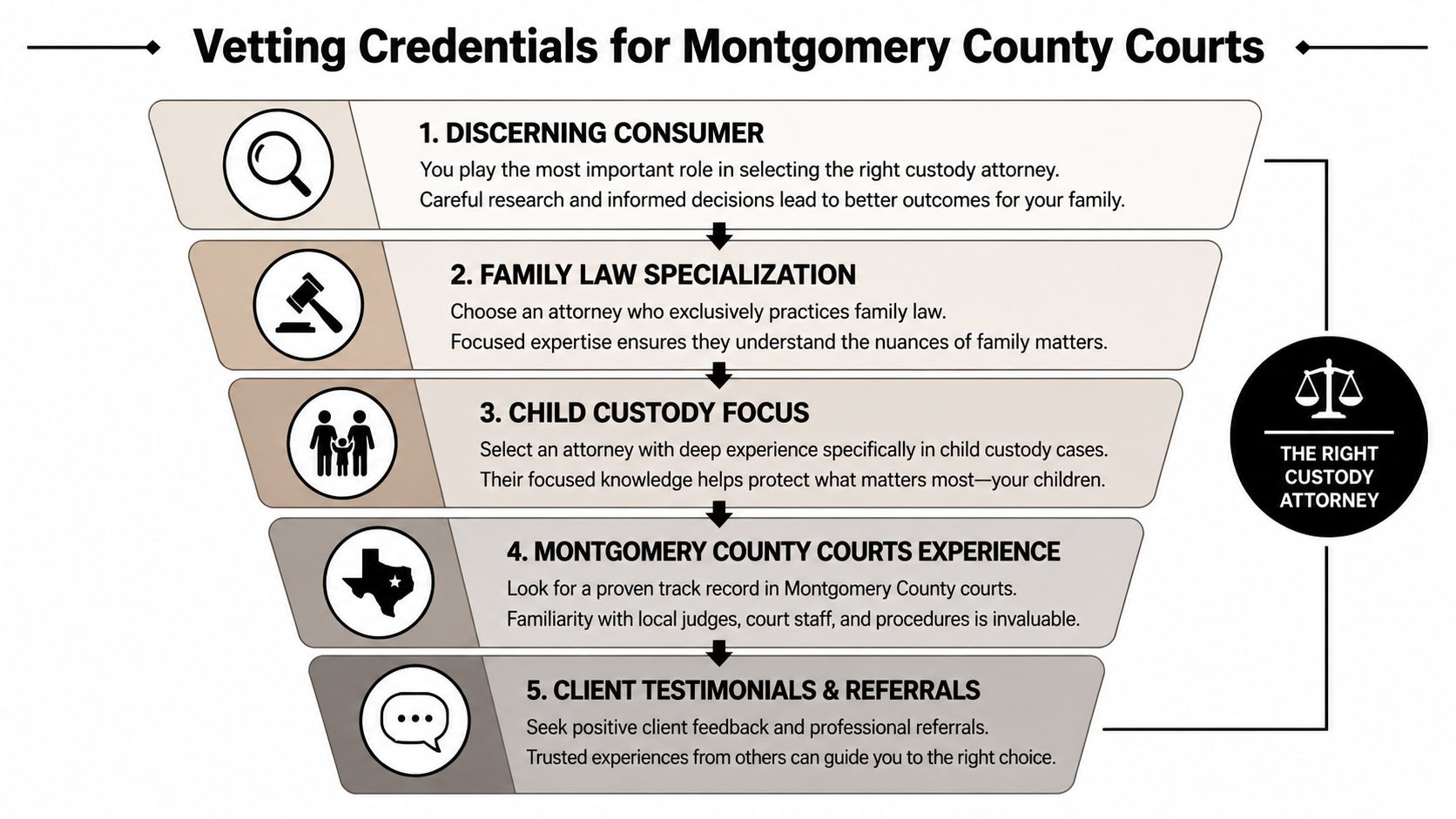
Vetting Credentials for Montgomery County Courts
Once you have a short list, start narrowing it. At this stage, many parents get distracted by branding, office décor, or broad claims about courtroom strength. Those things don't decide custody cases. Local court experience does.
What local court experience actually means
In Texas family law, a custody case near The Woodlands is typically handled in the county's district court system rather than a specialized custody-only court, because conservatorship and possession are governed under the Texas Family Code and applied through local family courts in divorce, paternity, modification, and enforcement matters. The Woodlands sits primarily in Montgomery County, and that local process matters. Office listings also show family-law practices operating directly in town at 2001 Timberloch Place, Suite 125, which reflects an established legal market in The Woodlands area, as noted by The Woodlands family law office listing.
That matters because local procedure shapes strategy. The statewide rules come from the Family Code. The lived reality comes from how judges expect parties to present facts, how emergency requests are screened, how temporary-orders hearings are approached, and how prepared your lawyer is when the court wants concise, relevant proof.
Credentials that matter more than marketing
Ask whether the lawyer regularly handles:
- Temporary orders hearings: These often set the tone for the entire case.
- Modification suits: A solid trial lawyer knows the difference between being unhappy with an order and having legally sufficient grounds to change it.
- Enforcement actions: If the other parent isn't following orders, enforcement requires precision.
- High-conflict parenting disputes: These cases often involve communication breakdown, school issues, or decision-making disputes.
One practical comparison point is whether the attorney can explain a case path without overselling it. A useful local reference for comparison is this page discussing a best child custody lawyer in The Woodlands, Texas. What matters is not the label. It's whether the lawyer can tie legal options to facts and evidence.
The lawyer you want is the one who can tell you what the judge needs to see, what evidence is missing, and what your weak spots are.
Ask about fit, not just experience
A technically capable lawyer can still be a poor fit if the practice is disorganized or inaccessible. During vetting, pay attention to:
- Who returns calls and emails
- Whether documents are requested early
- Whether the office explains conservatorship and possession in plain English
- Whether anyone discusses realistic local process instead of vague statewide generalities
The best credential in a custody matter is disciplined repetition. A lawyer who regularly works in Montgomery County courts usually sees patterns earlier, spots avoidable mistakes sooner, and can prepare you for what's coming instead of reacting after the damage is done.
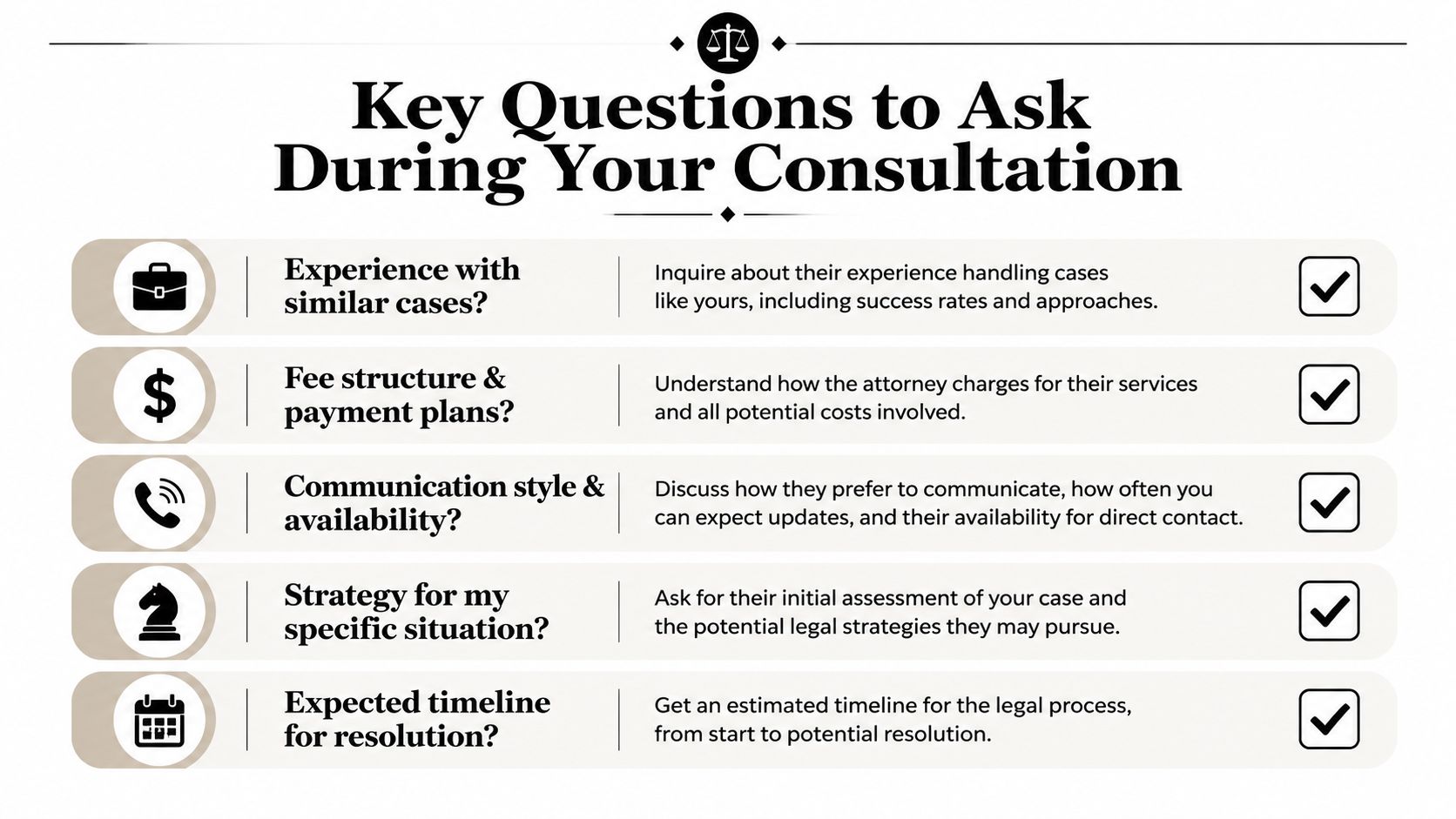
Key Questions to Ask During Your Consultation
A consultation isn't a sales meeting. It's your interview of the lawyer. You're hiring someone to help make decisions that affect your child's routine, your rights as a parent, and the tone of your family's future.
The strongest consultations feel specific fast. After hearing your basic facts, the lawyer should start identifying pressure points. If all you hear is confidence with no analysis, that's a problem.
Questions that reveal how the lawyer thinks
Bring written questions with you. Start with these:
What are the biggest risks in my case right now?
This tells you whether the lawyer is spotting legal and practical issues early.What would you do first if you were handling this case today?
Good answers often involve records, timeline cleanup, or immediate filing decisions.Will you likely recommend temporary orders? Why or why not?
This helps you understand whether the lawyer is strategic or reflexive.Who will be my main point of contact?
You need to know whether communication runs through the attorney, a paralegal, or a team model.How do you prepare clients for mediation or hearings?
This tells you whether the lawyer has a repeatable process.
A firm's consultation process itself can be a useful signal. Some families compare that with pages like this one about a family lawyer in The Woodlands, TX consultation, then decide which office gives the clearest path forward.
A short video can also help you frame what to ask and listen for during an initial meeting.
Ask for strategy, not promises
If your main concern is that the other parent is speaking badly about you to the child, don't stop at “Can you fix this?” Ask a sharper question: how would you address this issue in a Montgomery County custody case, and what proof would matter?
That question forces the lawyer to talk strategy. A serious answer might include documenting statements, protecting the child from being pulled into the dispute, reviewing existing orders, and deciding whether the issue supports negotiation, mediation position, or court intervention.
“Tell me what facts would change your recommendation.” That single question often reveals whether a lawyer thinks like a litigator or just talks like one.
Fees and timelines need clear answers
Texas family law matters are often handled through a retainer and hourly billing structure. You should ask:
- How are services billed
- Whether paralegal time is billed separately
- How often invoices are sent
- What events usually increase costs
- Whether emergency hearings or contested discovery change the expected workload
On timeline, a careful lawyer won't promise a finish date. What they should do is describe the likely stages. Filing. service. temporary orders if needed. document gathering. mediation. then trial only if necessary. That answer is much more useful than a vague assurance that your case will move “quickly.”
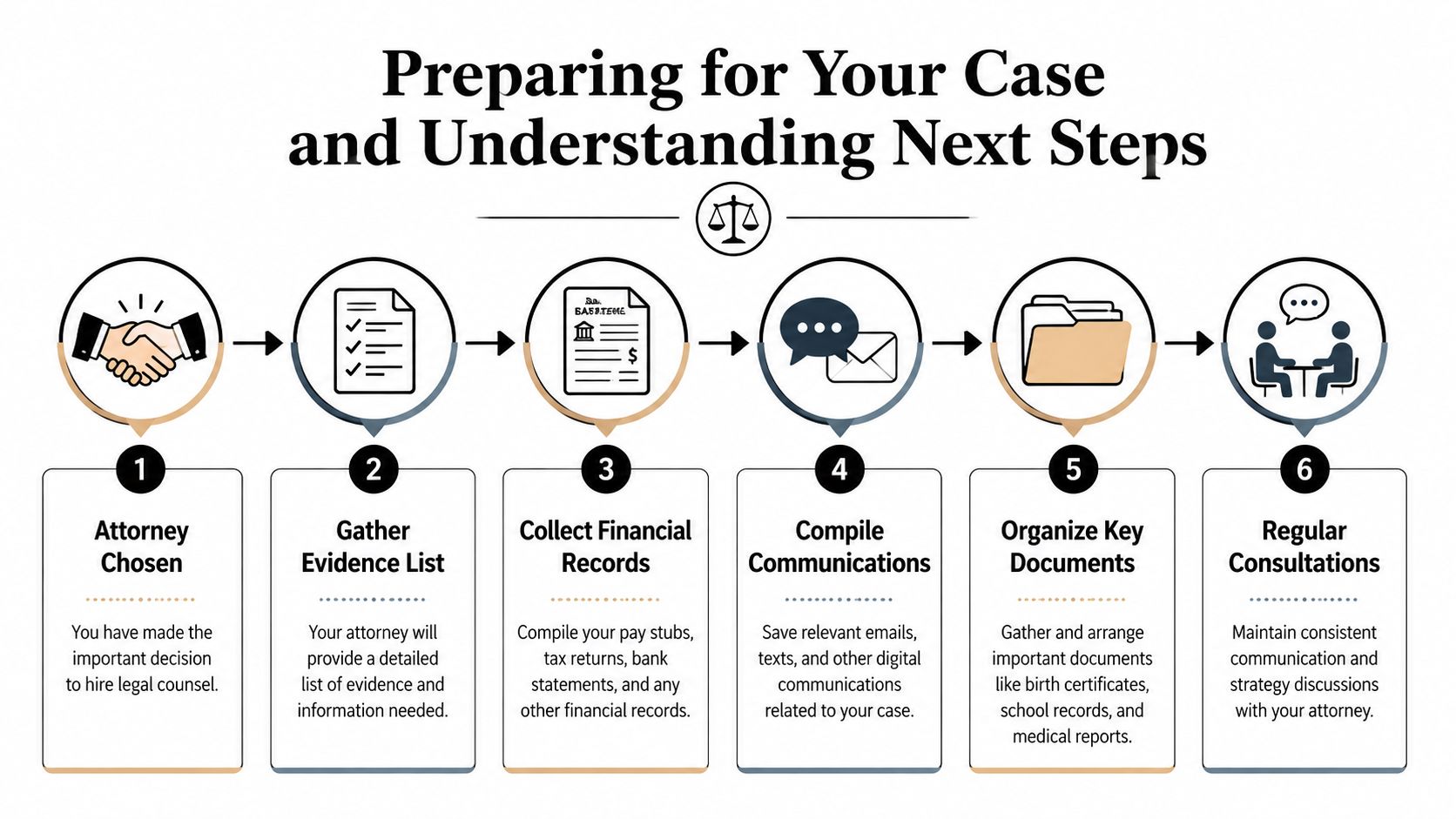
Preparing for Your Case and Understanding Next Steps
A parent walks into my office after a rough exchange at school pickup. They are upset, they have 600 screenshots on their phone, and they want to know what happens next. My first answer is usually the same. Slow down, get organized, and stop making new problems in the middle of the case.
After you hire counsel, your case becomes a record. Judges in Montgomery County do not decide custody based on who feels more wronged. They look for a clear timeline, reliable documents, and conduct that shows good judgment under stress.
Start with documents and a timeline
Your lawyer will need a usable file, not a digital box of loose paper. Gather the core records first. That usually means messages with the other parent, school records, medical information, calendars, photos if they matter, and any existing court orders.
Then build a timeline. Date each event. Add a short note explaining why it matters. If there was a missed pickup, include the time, the exact text thread, who was present, and what happened after. If the dispute involves school decisions or medical care, show the pattern over time instead of one isolated argument.
That kind of organization matters because custody cases turn on routine. The court wants to see how your child's life works, who handles day-to-day responsibilities, and whether each parent supports stability.
What the early phase usually looks like in Montgomery County
The first step is filing or answering the suit, depending on who started the case. After that, the case often moves quickly into the temporary-orders stage if parents disagree about possession, decision-making, support, or immediate restrictions on conduct.
Do not treat temporary orders like a dress rehearsal.
In many Montgomery County cases, those early orders set the working arrangement for months. That schedule can influence school logistics, extracurriculars, communication patterns, and how the judge views each parent's follow-through. A parent who looks organized and child-focused early usually stands on firmer ground later than a parent who spends the first two months reacting emotionally.
Timing also matters. Some court settings move faster than clients expect. Others take longer because of crowded dockets, the need for a custody evaluation, discovery disputes, or waiting for mediation. A good lawyer should give you a realistic range, not a polished promise.
Mediation is often the first serious settlement opportunity
Many Montgomery County judges expect real effort before trial. That usually means preparing for mediation with the same care you would bring to a hearing. Parenting proposals, calendars, school options, travel logistics, and reimbursement records often matter more in mediation than broad complaints about the other parent's attitude.
If mediation is new to you, this outside guide can help you understand how mediation works before you walk into that room.
Come prepared with a practical position. Know which points are flexible and which ones affect your child's routine, safety, or schooling. Mediation tends to go badly when a parent shows up with grievances but no plan.
What helps and what hurts
| Helps your case | Hurts your case |
|---|---|
| Keeping a parenting calendar | Relying on memory alone |
| Saving complete message threads | Cherry-picking texts out of context |
| Following existing orders | Self-help changes to possession |
| Staying child-focused in messages | Angry, sarcastic, or threatening texts |
| Bringing school and medical records | General complaints with no documents |
Local court habits matter more than statewide articles admit
Parents ask all the time how Montgomery County judges tend to handle these cases. The honest answer is specific, not dramatic. Judges differ in how they run hearings, how much patience they have for disorganized evidence, and how quickly they spot exaggeration.
Some want concise testimony and clean exhibits. Some press harder on gaps in a parent's story, especially if the documents do not match the accusation. Across the board, sloppy preparation hurts. So does overreaching. If you claim the other parent is uninvolved, but your own messages show regular school pickup, medical attendance, or active communication, your credibility takes a hit that is hard to repair.
That is why good preparation is narrower than many parents expect. The goal is not to collect every bad moment from the relationship. The goal is to prove the points that affect conservatorship, possession, and your child's daily life.
Keep your expectations disciplined
Custody cases usually improve when the facts are documented clearly and the parent stays steady. They usually get harder when someone starts freelancing. That can mean withholding the child, sending hostile texts, dragging the child into adult conflict, or making unilateral school or medical decisions without advice from counsel.
From now on, assume your conduct may appear in an affidavit, a hearing, or mediation. Keep a clean calendar. Use neutral language. Follow temporary orders closely if they are in place. If a school, travel, counseling, or medical issue comes up, ask your lawyer before you make a move that could be framed as unreasonable.
That discipline gives your case structure. In Montgomery County court, structure and credibility carry a lot of weight.
Your Next Steps Checklist
The right way to approach a custody dispute in The Woodlands is steady, local, and fact-driven. Don't treat this like a general internet problem. It's a Montgomery County court matter involving your child, your credibility, and your ability to show the court a stable plan.
What to do next
- Build your shortlist: Identify 3 to 5 attorneys with a real presence in The Woodlands or Montgomery County and a clear family-law focus.
- Verify standing: Check each lawyer's State Bar status and disciplinary history before you schedule anything.
- Book consultations: Meet with your top choices and compare how each one evaluates risk, process, and likely next steps.
- Bring better questions: Ask about temporary orders, communication style, case strategy, mediation preparation, and who will handle your file day to day.
- Start collecting records now: Organize messages, calendars, school information, medical records, and any existing orders.
- Choose based on fit and process: Hire the lawyer who explains your weak points clearly, gives you a realistic plan, and communicates in a way you can rely on.
Keep one principle in mind
Parents often feel pressure to act fast and speak loudly. In court, those aren't always the same thing as acting well. The stronger path is measured action backed by documents, preparation, and advice from someone who knows how Montgomery County family courts work.
If your case may be decided on credibility, every text, missed exchange, and avoidable argument matters.
This article is for general informational purposes only. It is not legal advice, and reading it does not create an attorney-client relationship. You should speak directly with a lawyer about the facts of your own case before making legal decisions.
Protecting your relationship with your child starts with getting clear about the process and taking the next right step.
If you want to talk through your situation with a local family law team, you can schedule a consultation with The Law Office of Bryan Fagan. The firm serves families in The Woodlands and surrounding Montgomery County communities in custody, divorce, modification, and enforcement matters.
