
You've filed a custody motion in Montgomery County, served the other parent, and found what looks like a hearing date online. Then the 410th District Court tells you the matter isn't set. That situation is common when litigants treat a docket search as setting authority or send a notice before the coordinator confirms the date and time.
For families in The Woodlands and throughout Montgomery County, the Montgomery County 410th District Court family docket procedures are coordinator-first. The sequence matters. A written request, court confirmation, proper notice, complete paperwork, and careful deadline tracking can determine whether a matter proceeds or gets reset.
How the 410th District Court Family Docket Works in Montgomery County
A parent in The Woodlands may need temporary orders covering possession, child support, exclusive use of a home, or payment of household expenses. Filing the motion is only the beginning. The 410th District Court uses a coordinator-driven process for setting hearings and trials, so the court coordinator plays a central role in determining how and when the matter reaches the docket.
The court requires hearing requests to be made in writing. The coordinator establishes procedures for setting cases for trial and hearings, provides a printed docket sheet for each hearing day, and maintains a submission docket for matters that can be decided without live testimony. These practices are described in the Texas Supreme Court administrative materials concerning Montgomery County family-court administration.

What the docket controls
The docket provides the operational framework for temporary orders, enforcement matters, contested divorce issues, custody disputes, and final trial settings. Family cases can require faster decisions than ordinary civil disputes, particularly when a child's living arrangement, support, or immediate safety is involved.
The court also generates a docket control order in each civil case with a trial setting, discovery cutoff date, and pretrial conference date. Those dates are not background information. They shape when discovery must finish, when motions should be ready, and when the parties need to prepare for trial.
A short example shows why the process matters. A parent in Alden Bridge files a request for temporary child-support orders because the other parent stopped contributing to agreed expenses. The parent finds an apparent date through an online docket search and sends a notice. If the coordinator hasn't confirmed the setting, the parent may have to correct the notice and reschedule instead of presenting the issue when expected.
Practical takeaway: The coordinator controls the setting process. An online case entry or a filed motion doesn't, by itself, create a confirmed hearing date.
The court's office operates Monday through Friday from 8:00 a.m. to 5:00 p.m., with a daily lunch closure from 12:00 p.m. to 1:00 p.m. Local Montgomery County family-court rules formalize how settings, notices, and scheduling orders operate across the county's family courts. The next practical question is how to obtain the date before serving notice.
Getting a Hearing Date Set With the Court Coordinator
The safest approach is to treat the coordinator as the first stop, not the final check. For an ancillary or submission docket setting, the 410th District Court instructs parties to call or email the court to set the case. The court also warns parties not to e-file or send a notice of hearing until court staff confirms the hearing date and time, as stated on the 410th District Court's official docket and scheduling page.
That sequence prevents a basic but costly mistake. A filing party can't unilaterally select a date for an ancillary or submission matter and then expect the court to treat the notice as effective. The court must first assign or confirm the date and time.
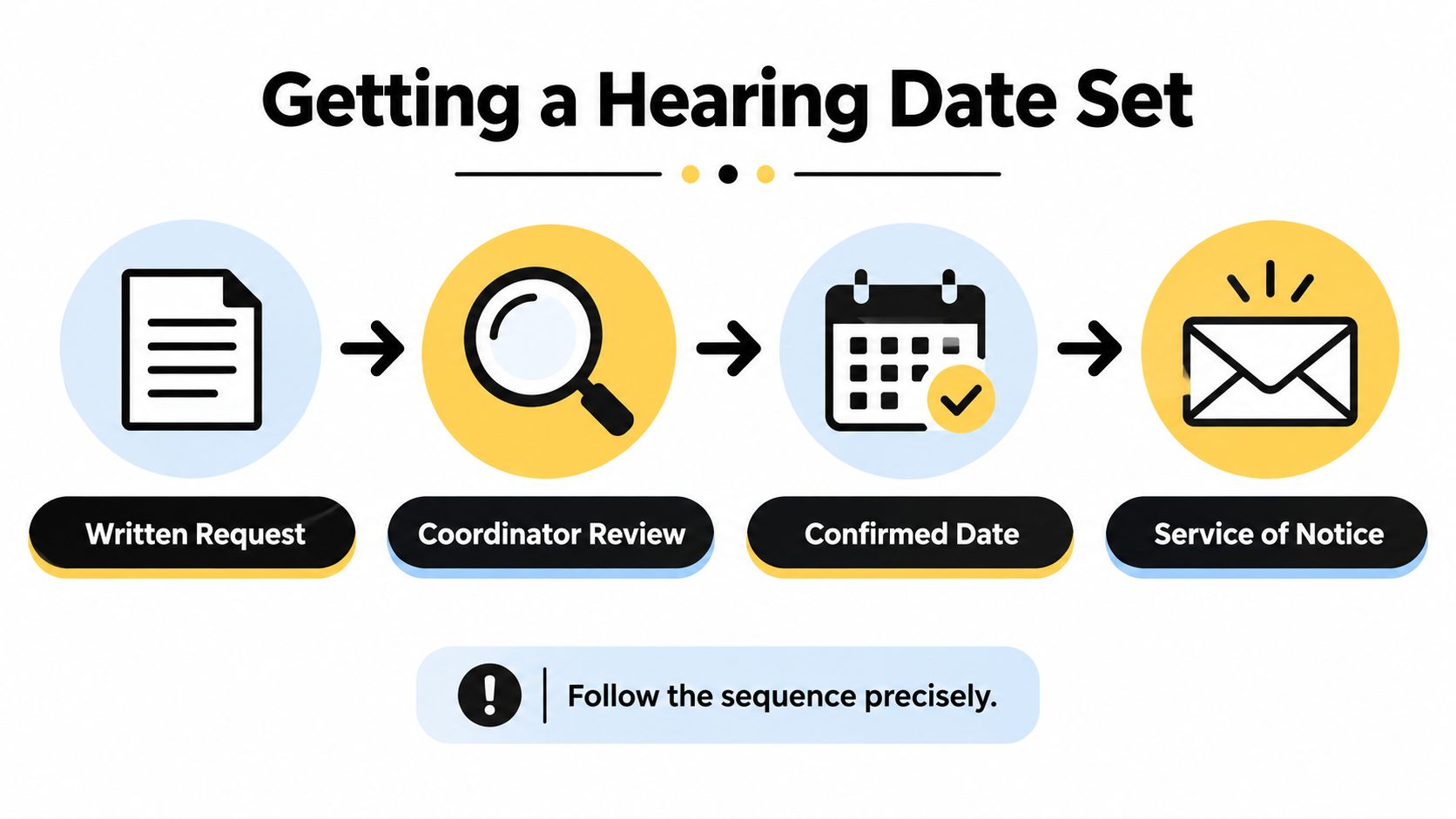
The setting sequence
Make a written request. Identify the case, the motion or matter to be heard, and whether you're seeking an ancillary setting, a submission setting, or another type of hearing.
Contact the coordinator. Call or email during the court office's published operating hours. Keep a record of the request and any response from court staff.
Wait for confirmation. Don't assume that a proposed date is final until the court confirms the date and time. Ask questions if the response doesn't identify both.
Serve notice after confirmation. Once the setting is confirmed, serve all parties with the notice required for that hearing type and file the appropriate documents.
A request should be specific enough for the coordinator to understand what the court needs to place on the docket. Include the cause number, party names, motion title, requested hearing type, anticipated time requirements if known, and contact information. If the matter concerns temporary orders, explain whether the request depends on live testimony or can be decided from filings.
A common Woodlands mistake
A spouse in Creekside files for temporary orders in a divorce and immediately e-files a notice naming a convenient date. The court hasn't approved that date. The filing may create confusion, but it doesn't replace coordinator confirmation. The better practice is to contact the court first, obtain the setting, then serve and file the notice using the confirmed information.
For broader context on how cases move through courts serving The Woodlands, see Montgomery County Family Courts A Local Guide. For a temporary-orders matter, the related discussion of temporary orders hearings in a Montgomery County divorce can help explain the issues that may need to be presented.
The court has also used strict pretrial coordination practices. A standing order required attorneys and self-represented parties to contact the court at least 48 hours before a scheduled pretrial conference if an agreed order had been filed, and to file a continuance motion at least 72 hours before the start of the pretrial hearing. The same order directed parties to use Court Call at pretrial conferences whenever possible. Those details show why a last-minute email or unconfirmed notice often doesn't solve the problem.
Filing Service and Docket Control Orders You Must Follow
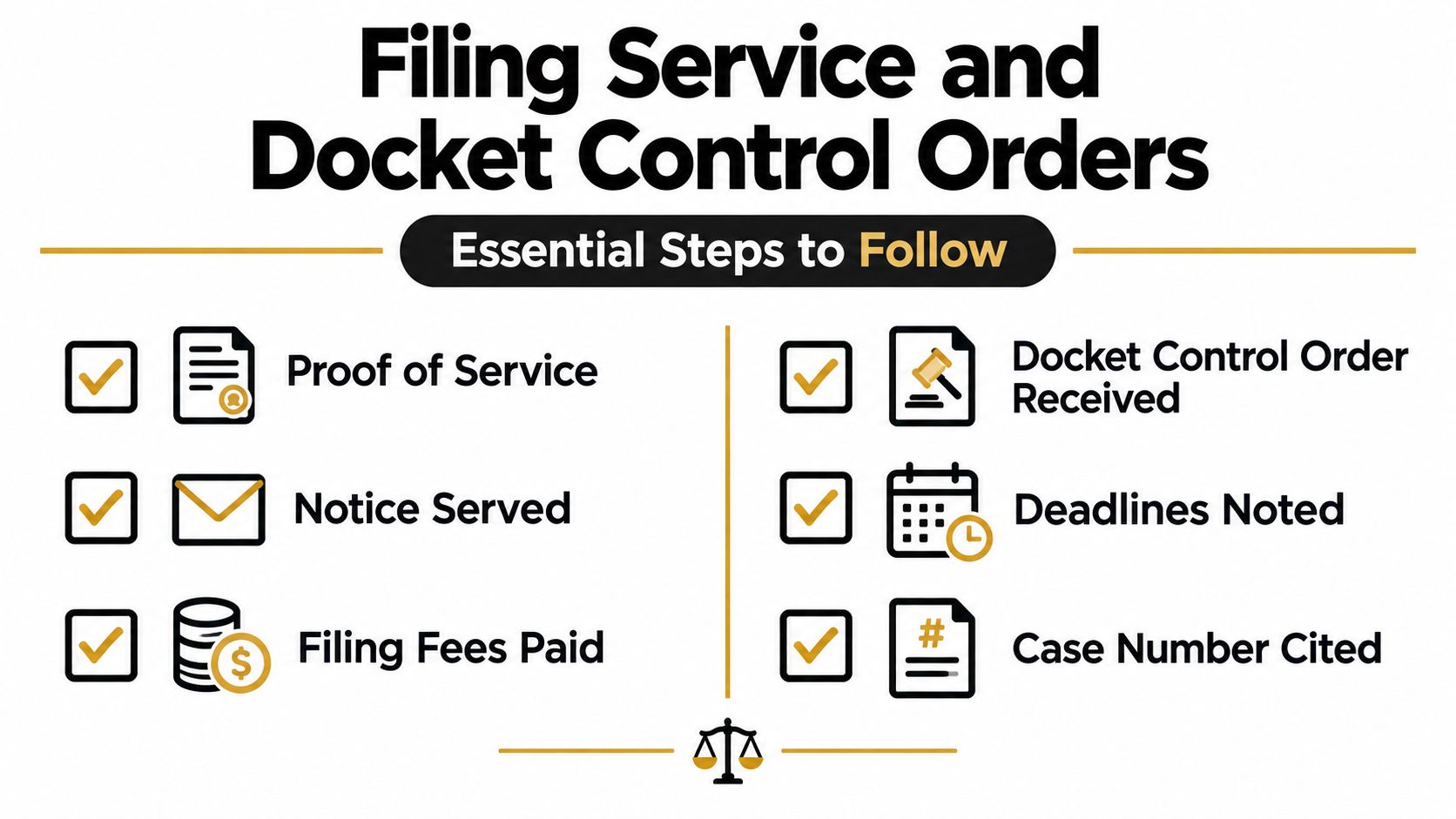
A hearing date is only useful when the filing matches what the coordinator approved. Use the correct cause number, identify the confirmed date and time, serve each party entitled to notice, and preserve proof of service in the case file. An email requesting a setting is not proof that the opposing party received the motion.
In the 410th District Court, setting the matter and serving the papers are separate jobs. Counsel or a self-represented party must complete both. A filing that omits a required party, uses an unconfirmed date, or leaves service undocumented can force the court to reset the matter before anyone reaches the merits.
Use the docket control order as a working file
Once the court issues a docket control order, enter each deadline into a shared calendar and assign someone to confirm completion. The order controls more than the trial date. It sets the point after which discovery requests, responses, amended pleadings, motions, and exhibit preparation may require court permission or a schedule adjustment.
A parent in Panther Creek may need to coordinate document collection with school exchanges and work hours. A parent in Sterling Ridge may need time for financial records, witness availability, and transportation arrangements. Those practical conflicts do not change the order, so waiting to review it can leave too little time to obtain records or address incomplete discovery.
The order also does not eliminate timing requirements imposed by the Texas Family Code. In a divorce case, a statutory waiting period may affect whether a trial setting can proceed even when the court's calendar has space. Check both the court deadline and the applicable statutory requirement before treating a setting as ready.
Assemble the filing packet before service
The packet depends on the motion, the relief requested, and each party's service status. Confirm the cause number, requested relief, supporting evidence, proposed order, and hearing information. If a required item is missing, the coordinator or court may decline to proceed, or the opposing party may object to proceeding on the scheduled date.
Use Montgomery County family court required forms at filing to check document requirements that commonly affect filing preparation. Probate matters follow the Texas Estates Code and should not be filed as though they were family-court motions. Protective-order cases are also distinct, particularly when domestic violence or immediate family safety concerns are involved. See Protective Orders in The Woodlands for that separate process.
Before the hearing approaches, the file should show the confirmed setting, filed pleading, complete notice, valid service, supporting materials, proposed order, and applicable deadline entries. That checklist gives the coordinator a usable record and gives the parties a clear way to identify what remains unfinished.
Submission Dockets Versus Live Testimony Hearings
The first question isn't “How quickly can I get a hearing?” It's “Does the judge need live testimony to decide this motion?” Montgomery County's standing order separates matters that can be decided on written submissions from matters that require an oral hearing with testimony or argument.
Motions and hearings that don't require live testimony must be set by submission with at least 10 days' notice, and the notice period must be longer when the Texas Rules of Civil Procedure require more time, including 21 days for summary-judgment motions. The Montgomery County standing order on motions and hearings also provides that submission dates come from the court coordinator.
A party may request an oral hearing in writing when filing the motion. Responses and a proposed order must be filed at least two working days before the submission date, which makes calendar control essential.
A practical comparison
| Hearing Type | When to Use | Notice and Deadline |
|---|---|---|
| Submission docket | A motion can be decided from pleadings, affidavits, records, and other written materials without live testimony | At least 10 days' notice, or longer when the Texas Rules of Civil Procedure require it. Responses and a proposed order are due at least two working days before submission |
| Live hearing or ancillary setting | The judge needs testimony, live presentation, or an oral hearing on disputed facts | Obtain the date and time from the coordinator before serving notice. Follow the confirmed setting and applicable notice requirements |
| Oral hearing request | A party believes written materials aren't enough to address the motion | Make the request in writing when filing and coordinate the hearing date with court staff |
Choosing the right track
A document-only support modification may fit submission if the financial records and other evidence allow the judge to decide the issue without testimony. The filing party still needs the coordinator's submission date, proper notice, timely responses, and a proposed order.
Temporary orders involving disputed credibility, immediate possession, or conflicting accounts may need live testimony. An uncontested matter may be reviewed before pretrial and, under applicable standing or default procedures, may sometimes be placed on the current trial date without a separate appearance. That possibility doesn't eliminate the need for complete paperwork or court confirmation.
The trade-off is practical. Submission can reduce the need for an appearance when the evidence is documentary, but it gives the parties less room to correct an incomplete written presentation at the last minute. A live hearing permits testimony and direct argument, but it requires coordination, preparation, and attendance.
Common Pitfalls That Delay or Reset Your Family Case
Most docket problems aren't caused by an exotic legal issue. They come from a missed local deadline, an incomplete default packet, an unconfirmed setting, or the mistaken belief that a case can remain open indefinitely without trial preparation.
Montgomery County's local family-court rules use a fast-track benchmark. A case must be tried or dismissed within 6 months from the appearance date, or within 6 months after an applicable Family Code waiting period expires, whichever is later, as provided in the Montgomery County local rules. That benchmark makes early case management important, particularly when discovery, service, mediation, or temporary orders remain unresolved.
The errors that create avoidable trouble
Treating Odyssey as a hearing notice: Montgomery County directs users to the district clerk's Odyssey docket inquiry for case searches through its public court docket guidance. A docket search can help locate case information, but it doesn't substitute for court-approved hearing-date confirmation.
Filing a default packet without required proof: Default family matters involving marital-estate division require a sworn Inventory and Appraisement. Support issues require proposed child-support calculations and proof of insurance when relevant. If those documents are missing or incomplete, the hearing can be reset.
Waiting until pretrial to raise an agreed order: The 410th Court standing-order practice required contact with the court at least 48 hours before pretrial when an agreed order had been filed. It also required continuance motions at least 72 hours before the pretrial hearing began.
Assuming “uncontested” means “paperwork-light”: An uncontested case may have no opposing witness, but the court still needs the documents required to enter the requested relief.
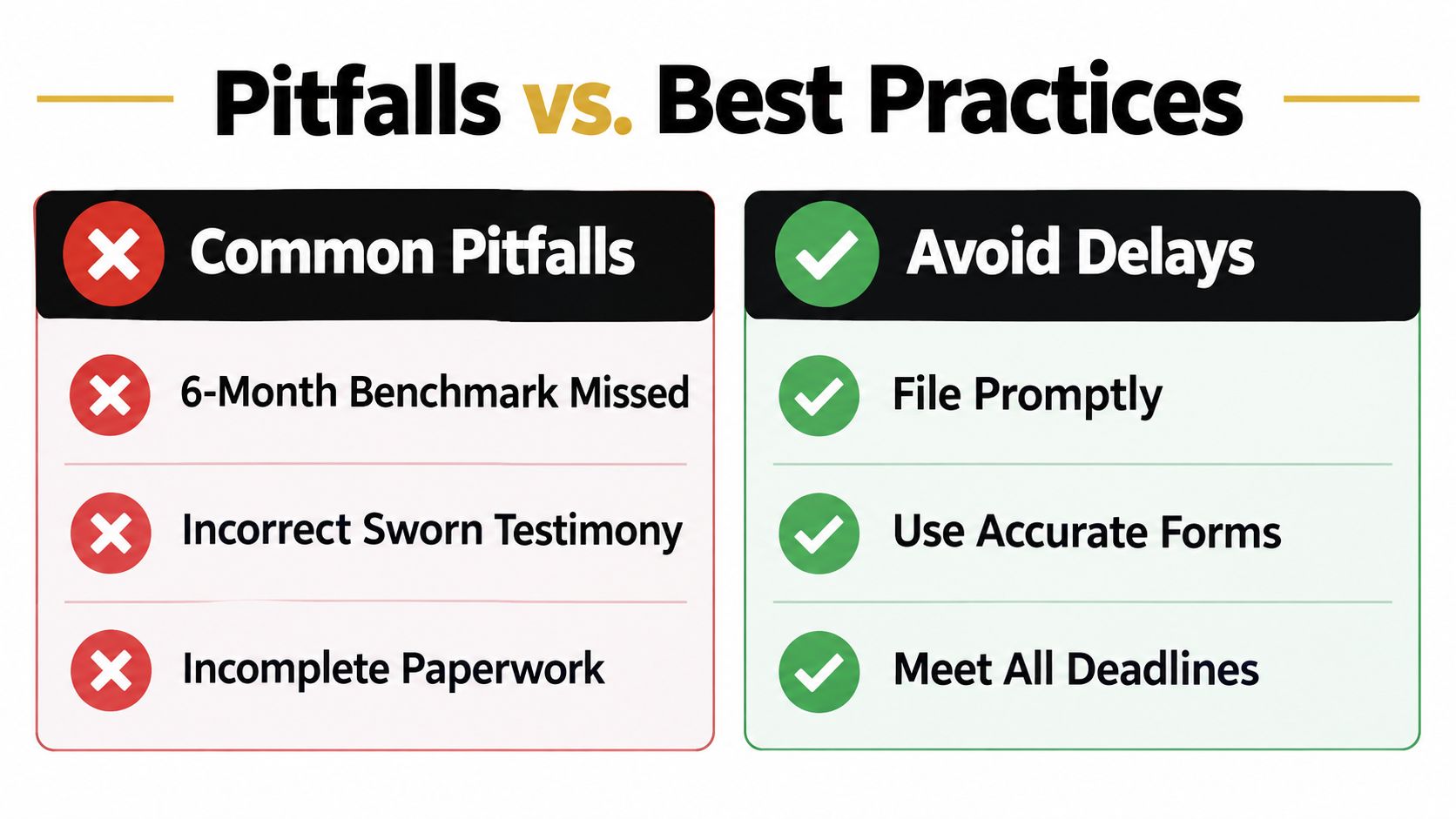
Completeness is a scheduling issue, not just a paperwork issue. When a required document is missing, the court may be unable to grant relief even if nobody appears to oppose it.
What works and what doesn't
What works: maintain a deadline calendar, verify the setting with the coordinator, use the correct hearing track, prepare the proposed order early, and review every required document before the hearing.
What doesn't work: relying on an online docket entry, e-filing notice before confirmation, assuming the opposing party's silence cures missing documents, or waiting until the eve of pretrial to request a continuance.
These problems affect divorce, custody, support, and enforcement cases. They can also affect a parent who believes the matter is simple because the other party has agreed. Local procedure still controls whether the judge can hear and decide the request.
What to Do Next and How The Woodlands Families Get Help
A parent in The Woodlands who needs a 410th District Court setting should focus on sequence and completeness. Start with the coordinator, not an assumed date. Then match the motion to the correct docket, serve notice after confirmation, and calendar every response, pretrial, discovery, and trial deadline.
What to do next
- Identify the relief: Decide whether the matter concerns temporary orders, custody, support, enforcement, divorce, property division, or another family issue.
- Classify the hearing: Determine whether the judge needs live testimony or whether the motion can proceed by submission.
- Request the setting: Contact the 410th District Court coordinator in writing and obtain a confirmed date and time.
- Serve and file carefully: Serve all parties after confirmation, use the correct cause number, and retain proof of service.
- Review the control order: Note the trial setting, discovery cutoff, and pretrial conference date.
- Complete the packet: For default or uncontested matters, check for a sworn Inventory and Appraisement, support calculations, insurance proof, and any other required materials.
- Check statutory timing: Review the applicable Texas Family Code provisions, including divorce waiting-period requirements. Use the Texas Estates Code for probate matters rather than treating an estate filing as a family-court pleading.
- Prepare for the actual setting: Don't rely only on Odyssey or an informal agreement about the date.
The Woodlands parent who needed temporary support and custody orders may avoid a reset by confirming the date first, choosing between submission and live testimony based on the evidence, and completing the required documents before the setting. For an existing decree or custody order, Enforcement of Court Orders in The Woodlands addresses the separate enforcement context.
This is not legal advice. Court procedures and the documents required for a particular case can depend on the pleadings, service history, evidence, and relief requested. If you're unsure how the local process applies to your divorce, custody, support, or enforcement matter, review the circumstances with a Texas family-law attorney. Information about arranging a family-law consultation in The Woodlands can help you decide what assistance you need.
The Law Office of Bryan Fagan helps families in The Woodlands and Montgomery County prepare for coordinator-driven hearings, submission matters, temporary orders, custody disputes, divorce, support, and enforcement cases. Visit The Law Office of Bryan Fagan to schedule a consultation about your 410th District Court family docket concerns.