 Skip to content
You may be driving past Market Street, picking up the kids, or sitting in your driveway in Sterling Ridge trying to decide what to do first. Your mind goes straight to the hard questions. Who stays in the house? What happens with the children? How do you keep one bad decision from following you for years?
That feeling is normal. Divorce in The Woodlands doesn't just affect your legal status. It affects parenting, cash flow, property, and your daily routine.
The good news is that choosing the right lawyer gives you structure fast. If you approach it the right way, you can stop reacting and start making deliberate decisions that fit the realities of Montgomery County family court.
Your First Steps in a Woodlands Divorce
A divorce often stops feeling theoretical all at once. You are in the kitchen after the kids go to bed, and a conversation that was supposed to stay calm turns into questions about the house, the bank accounts, and where everyone will sleep next week. At that point, the first move matters.
Start by getting clear on whether your situation calls for immediate legal help or a short period of careful preparation. This overview on whether you need a lawyer for divorce in The Woodlands, Texas is a practical starting point. Some divorces stay cooperative. Others shift fast once temporary possession of the children, use of the home, or access to joint funds becomes contested.
A local example that feels familiar
In The Woodlands, I often see the same pattern. A couple assumes they can work things out privately, then one spouse transfers money, changes account access, or starts setting a parenting schedule without any written agreement. What looked manageable on Monday can create real legal exposure by Friday.
As noted earlier in the Texas Family Code, divorce can involve far more than ending the marriage. In Montgomery County, the early issues usually center on temporary orders, parenting schedules, support, and who keeps control of major assets while the case is pending. Those first decisions can affect your positioning in settlement talks and the tone of the case from the start.
The local piece many people miss is court experience. A lawyer who regularly appears in Montgomery County usually has a better feel for how local judges approach temporary hearings, custody disputes, and property issues tied to closely held businesses, executive compensation, or separate property claims. That knowledge does not guarantee a result, but it does improve your ability to make sound decisions early.
Practical rule: Hire the lawyer who can identify your immediate risk, explain the likely court process in Montgomery County, and tell you what needs to happen in the next few days, not just promise to "fight."
What to do in the first week
Keep the focus on protection and organization.
- Secure financial information: collect recent bank statements, tax returns, pay stubs, retirement account summaries, mortgage records, and documents tied to bonuses, stock awards, or business interests.
- Write down the current parenting routine: note school drop-offs, overnights, activities, medical needs, and who has been handling day-to-day decisions.
- Preserve communication: save texts, emails, and calendar entries if they relate to parenting, money, or threats to remove property.
- Be careful with the house: if a sale may be part of the divorce, the Property Nation guide gives a useful overview of practical sale issues, but get legal advice before agreeing to terms that affect possession, reimbursement claims, or proceeds.
- Avoid casual side deals: informal agreements about the children, support, or property often create confusion and can be hard to enforce.
Calm, organized action helps more than quick reactions. The right lawyer at this stage is the one who can size up the facts, explain the trade-offs, and protect your position in the Montgomery County courts from day one.
First Define Your Divorce Needs and Goals
A spouse moves out, the kids still need to get to school Monday morning, and somebody asks, "Have you hired a lawyer yet?" Before you start calling firms, get clear on what the case requires. The right fit for an agreed divorce is different from the right fit for a custody fight or a property dispute involving a business, separate property tracing, or a home in Carlton Woods.

A sound approach to choosing a divorce lawyer in The Woodlands is to sort your case by complexity first. Lawyers often market themselves the same way online. In practice, Montgomery County cases can turn on very different skills. One lawyer may be efficient with agreed decrees and routine temporary orders. Another may be far better at contested hearings, business valuation disputes, or building a workable possession schedule for parents with demanding work and school calendars.
Put your case into one bucket
Start here:
Simple or mostly agreed
You and your spouse agree on the main terms, the estate is modest, and there is no serious custody dispute.Custody-driven conflict
The main disagreement involves the children. That may mean conservatorship, possession, school choice, medical decisions, relocation concerns, or one parent's consistency.High-asset or high-conflict
The case involves substantial property, separate property claims, a closely held business, stock compensation, trust interests, reimbursement issues, or a spouse likely to contest every point.
This exercise saves money. It also helps you avoid hiring a lawyer whose experience is too general for the problems your case is likely to present in Montgomery County.
Build a private case brief
Prepare a short written summary before any consultation. Keep it factual. Keep it tight. A page or two is enough.
Include:
- Core family facts: date of marriage, date of separation, children's ages, and where everyone is living now
- Financial outline: house, vehicles, retirement accounts, business interests, debts, inheritances, and large monthly obligations
- Pressure points: access to cash, use of the home, school transportation, health insurance, alcohol or drug concerns, or missing financial information
- Your real priorities: what you want most if every issue does not break your way
A lawyer can give better advice faster when the facts are organized.
Know what calls for specialized local experience
Texas divorces do not all proceed on the same theory. Some are filed on no-fault grounds. Others involve allegations that affect settlement posture and, in some cases, the way a judge views the history of the marriage. Pleading choices can influence settlement discussions and may affect property arguments, so this is not paperwork to treat casually.
Property characterization is another dividing line. If one spouse claims an inheritance, premarital account, or separate contribution to a house, proof matters. Tracing matters. The lawyer should be comfortable reading account histories, identifying reimbursement issues, and explaining what evidence a Montgomery County judge is likely to expect.
The same point applies to parenting cases in The Woodlands. A standard possession order may work for some families. It may not fit a child with therapy appointments, private school demands, travel sports, or parents who work long or irregular hours. A good local lawyer should be able to discuss practical custody scheduling, temporary orders, and what tends to create problems in this county's courts. If you are comparing options, review a divorce attorney in The Woodlands, TX who regularly handles those issues close to home.
If the house is one of the biggest sources of stress, the Property Nation guide is a useful primer on sale logistics. It does not replace legal advice about possession, reimbursement claims, or division of proceeds, but it can help you ask better questions before you agree to anything.
What usually leads to a better hire
Clients make better choices when they do three things early:
- Define the main dispute clearly
- Separate emotional goals from legal priorities
- Look for a lawyer whose recent work matches the case they have
That filter works better than choosing the firm with the best slogan or the most polished website.
How to Research and Vet Lawyers in Montgomery County
Finding a divorce lawyer in The Woodlands often means encountering too many names, not too few. That abundance is beneficial if you know how to screen them.

In The Woodlands area, public directories provide a meaningful comparison set. Super Lawyers lists 189 top-rated divorce attorneys serving The Woodlands, TX, and Avvo shows 66 divorce attorneys with 1,654 reviews, which gives you room to compare credentials, client feedback, and family-law focus before contacting anyone, as shown in Avvo's The Woodlands divorce attorney directory.
What to check before you call
Start with verification, not impressions.
- State Bar standing: confirm the lawyer is licensed and look for any public disciplinary history.
- Practice focus: divorce and custody work should be a real part of the practice, not a side offering.
- Local relevance: look for experience in Montgomery County procedure, not just broad references to "Texas family law."
- Credentials: if an attorney is Board Certified in Family Law by the Texas Board of Legal Specialization, that's worth noting.
- Office presence: local accessibility matters more than many people think.
If you're building a shortlist, this page on finding a divorce attorney in The Woodlands, TX can help you compare what family-law representation typically looks like in this market.
Read reviews the right way
Reviews shouldn't decide the case for you. They should help you spot patterns.
Look for repeated comments about:
- Responsiveness: does the office return calls and emails?
- Clarity: does the lawyer explain process, deadlines, and likely outcomes in plain English?
- Case fit: do former clients mention custody disputes, property issues, or contested hearings that resemble yours?
- Professionalism under stress: divorce clients are often upset, so calm communication matters.
Ignore reviews that tell you nothing beyond "great lawyer" or "terrible service." They're not specific enough to help.
A short real-world scenario
Two friends in Montgomery County both needed divorce counsel. One hired the lawyer with the strongest billboard presence because it felt decisive. The other spent time checking whether the lawyer regularly handled family cases in local courts and whether the reviews mentioned communication and courtroom preparation.
The first friend later learned the lawyer's office treated the case like a routine file. The second friend had a clearer strategy from the start because the lawyer had handled similar custody and property issues before. That's usually the difference. Not magic. Better screening.
Marketing can get your attention. Verified family-law experience should get your trust.
How to narrow the list
Aim for a short list, not an endless search.
A practical approach is:
| Screening factor | What you want to see |
|---|---|
| Practice area | Family law is a core focus |
| Court familiarity | Montgomery County experience is visible |
| Review patterns | Specific comments about communication and case handling |
| Logistics | Accessible office, consistent operations, organized intake |
| Case match | Experience with your type of divorce |
Once a lawyer makes that list, then schedule a consultation. Not before.
The Initial Consultation Your Most Important Interview
The first consultation isn't a formality. It's a hiring interview. You're evaluating whether this lawyer can handle your case, explain the path ahead, and communicate in a way you can live with for months.
People often show up too nervous to ask direct questions. That's a mistake. You don't need to impress the lawyer. The lawyer needs to show you how they think.
A practical screening standard is communication and transparency. During the first meeting, a strong candidate should be able to explain rates, retainers, costs, and how they would approach your main issue, whether that's custody, support, or property. Vague answers are a red flag, as outlined in this guidance on choosing a divorce attorney with clear communication and billing.
What to bring
You don't need banker boxes. Bring enough to make the conversation concrete.
Consider taking:
- A one-page summary: your marriage history, children, employment, and the biggest contested issues
- Recent financial snapshots: account summaries, debt statements, tax returns if available
- Any court papers already filed: petitions, protective orders, prior custody orders, or modification requests
- A written question list: don't trust yourself to remember under stress
If you suspect separate property issues, inheritance claims, or trust-related questions, mention them early. In some divorces, estate planning documents and inherited assets matter, and the Texas Estates Code can become relevant when title, transfer, or inherited property history needs to be understood alongside family-law claims.
What the lawyer should be able to explain
A useful consultation leaves you with a workable map. Not certainty, but a map.
You should expect a lawyer to discuss:
- the likely first filing
- whether temporary orders may be needed
- whether mediation is likely
- what information needs to be gathered first
- what risks could change the course of the case
If the lawyer can only speak in generalities, keep looking.
Essential Questions for Your Attorney Consultation
| Category | Question to Ask |
|---|---|
| Local experience | How often do you handle divorce and custody matters in Montgomery County courts? |
| Case fit | Have you handled cases like mine involving my main issue? |
| Court strategy | If my spouse contests this, what happens first in court? |
| Temporary orders | Do you expect we may need temporary orders on the home, children, or finances? |
| Property division | How would you evaluate possible separate property, inheritances, or business interests? |
| Custody | What facts matter most if conservatorship or possession becomes disputed? |
| Mediation | At what point do you usually prepare a client for mediation? |
| Trial readiness | If settlement fails, how do you prepare a family case for final hearing or trial? |
| Communication | Who will return my calls and emails, and how quickly should I expect updates? |
| Staffing | What work do you personally handle, and what will a paralegal or associate handle? |
| Billing | How do you bill for phone calls, drafting, hearings, and preparation time? |
| Expectations | What can I do as a client to help or hurt my own case? |
Red flags that matter
Some warning signs are subtle. Some aren't.
Watch for these:
- The lawyer talks more about winning than about process
- Nobody can explain who will handle your file
- The fee answer is foggy or rushed
- The lawyer doesn't ask detailed questions about your children, finances, or risks
- You leave with less clarity than when you arrived
A good consultation doesn't promise outcomes. It shows disciplined thinking.
One practical note about local fit
For many families in The Woodlands, local knowledge matters most in contested matters. A lawyer doesn't need to boast about "knowing every judge." That's not the point. What matters is whether the lawyer understands how Montgomery County divorce cases usually move, when temporary issues need quick attention, and how to prepare for mediation versus hearing practice.
That kind of realism is more valuable than bravado.
Understanding Legal Fees and Avoiding Billing Surprises
Many people avoid fee questions because they're already overwhelmed. That's understandable, but it's expensive. If you don't understand billing at the start, you may end up fighting two problems at once. Your divorce and your own lawyer's invoice.

In The Woodlands market, fees often depend on case type. Contested matters are typically hourly, while some firms offer flat-fee packages for simple uncontested divorces, and one practical screening point is whether the lawyer can clearly explain pricing and office logistics during the first meeting, as reflected on the Cordell & Cordell The Woodlands office page.
Separate legal fees from case costs
Those aren't the same thing.
Legal fees pay for attorney and staff time. Case costs are outside expenses connected to the proceeding. A local source notes that filing fees are commonly about $300 to $350, and other costs may include mediation, service of process, or expert expenses, as noted earlier in the article's discussion of consultation and billing structure.
That distinction matters because a low retainer doesn't always mean a lower total cost.
Questions that prevent surprises
Use direct questions. Good lawyers won't be bothered by them.
Ask:
- What does the retainer cover?
- When does it need to be replenished?
- Do you bill hourly or flat fee for my type of case?
- How are phone calls, emails, drafting, and hearing prep billed?
- What outside costs should I expect if the case becomes contested?
If you're comparing firms, this guide on divorce lawyer cost in The Woodlands, TX can help you frame the right questions before you sign anything.
Billing red flags
You don't need a fee bargain. You need fee clarity.
Be cautious if:
- The engagement agreement is vague
- No one will explain how the retainer is used
- The office resists giving even a rough process-based budget discussion
- Administrative tasks seem padded or poorly described
- You feel pressured to sign before understanding the billing model
The cheapest-looking option can become the most expensive if the file is disorganized, overstaffed, or pushed into unnecessary conflict.
A fair billing relationship starts with a written agreement, a defined scope, and an office that answers money questions without getting defensive.
Making Your Final Decision and Next Steps
A final decision often comes into focus after you sit across from two or three lawyers and picture who you want beside you at a temporary orders hearing in Montgomery County. Credentials matter, but so does judgment under pressure. You want counsel who can assess your facts quickly, explain the likely court response, and help you make sound decisions when the case turns personal.
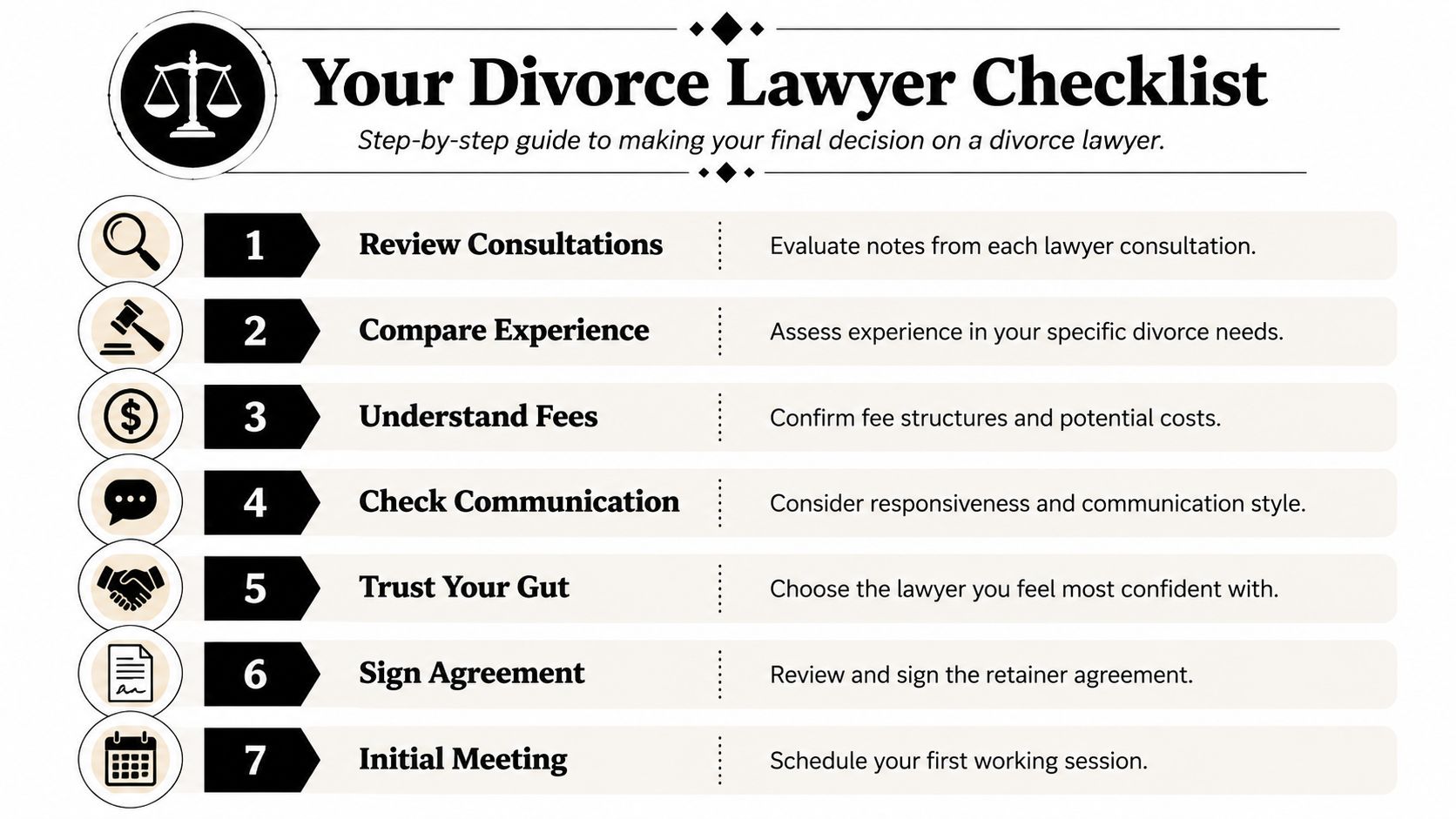
The final comparison that usually matters
Before you sign, focus on fit for your case, not general impressions.
Ask yourself:
- Who identified my biggest legal and financial risks early
- Who understood how Montgomery County judges may view my custody, property, or support issues
- Who gave practical advice instead of broad promises
- Who seemed prepared to handle conflict without creating unnecessary conflict
- Who explained a strategy that fits my goals, budget, and timeline
- Who would I trust to present my case clearly on a difficult court date
Local experience matters more in some divorces than others. If your case involves a family business, stock compensation, separate property claims, or a parenting schedule that has to work around demanding travel or school logistics, your lawyer should already know how those disputes tend to develop in this county. Familiarity with local procedure does not guarantee an outcome, but it often improves preparation, timing, and credibility.
If you're considering local options, The Law Office of Bryan Fagan is one firm that handles divorce, child custody, child support, and property division matters for families in The Woodlands and surrounding Montgomery County communities.
What to do next
Once you choose counsel, act promptly and stay organized.
- Sign the engagement letter only after you understand the scope of work
- Confirm who will handle day-to-day communication on your file
- Gather financial records, account statements, tax returns, and any custody-related documents
- List immediate concerns such as access to funds, living arrangements, or parenting time
- Follow your lawyer's advice about texts, social media, and communications with your spouse
- Calendar deadlines and respond quickly when your lawyer requests information
- Prepare for short-term decisions first, especially if temporary orders may be needed
One practical point matters here. A good lawyer cannot protect your position without complete facts. Share the difficult details early, including facts you think may hurt your case. In Montgomery County family court, surprises usually cost more to fix than to prepare for.
This article is for informational purposes only. It is not legal advice, and reading it does not create an attorney-client relationship. Every divorce turns on its own facts, and Texas law applies differently depending on the details.
If you're facing divorce in The Woodlands or anywhere in Montgomery County and want to talk through your specific situation, you can schedule a consultation with The Law Office of Bryan Fagan. A focused consultation can help you assess your options, understand the likely next steps, and decide what kind of representation fits your case.
