 Skip to content
You're probably reading this in a parking lot, outside the jail, or back in your driveway after a miserable night. Maybe the stop happened on Woodlands Parkway, Research Forest Drive, or I-45. You're replaying every word you said, wondering whether your license is about to disappear and whether this is going to wreck your job, your family, or both.
Take a breath. A DWI arrest in The Woodlands is serious, but it's manageable if you move fast and make smart decisions today instead of guessing. The biggest mistake I see is delay. The second biggest is hiring the first person who answers the phone without asking the right questions.
This guide is for people in The Woodlands and Montgomery County, Texas who need a practical roadmap right now. It's educational information only, not legal advice, and it doesn't replace advice from a qualified attorney about your specific case.
Your Guide to a DWI Arrest in The Woodlands
The first feeling after release is usually panic mixed with confusion. You may have paperwork in your hand, a court date you don't fully understand, and no idea whether the criminal case and the driver's license case are the same thing. They aren't. That difference matters immediately.

If you searched for a DWI lawyer in The Woodlands, TX, you're looking for clarity, not a lecture. Start with the basics. Protect your license. Protect your words. Protect the evidence. Then get local help from someone who deals with Montgomery County procedure, not just generic Texas criminal practice. If you need a broader overview of local defense representation, the firm's criminal defense page for The Woodlands is one starting point.
What matters most right now
You do not need to solve your whole case this morning.
You do need to avoid making it worse.
Practical rule: Treat the next few days like evidence preservation. Your memory is evidence. Your paperwork is evidence. Your silence is protection.
A lot of people talk themselves into trouble after release. They call friends, text coworkers, post online, or try to “explain” what happened. None of that helps. A calm, boring, disciplined response helps.
A quick local reality check
Montgomery County has its own habits, its own scheduling patterns, and its own courtroom routines. That's why generic advice from a statewide blog often leaves people in The Woodlands with the wrong expectations. Local procedure affects timing, strategy, and what your lawyer should attack first.
The First 24 Hours Your Immediate Next Steps
Here's the part that can't wait. In Texas, if you refused or failed a breath or blood test, you must request an Administrative License Revival hearing within 15 days of arrest to fight the suspension. If you miss that deadline, the suspension begins automatically on the 41st day after arrest, as explained in Doug Murphy's Texas DWI overview.
That deadline is the first thing I'd put on your calendar. Not tomorrow. Right now.
What to do next
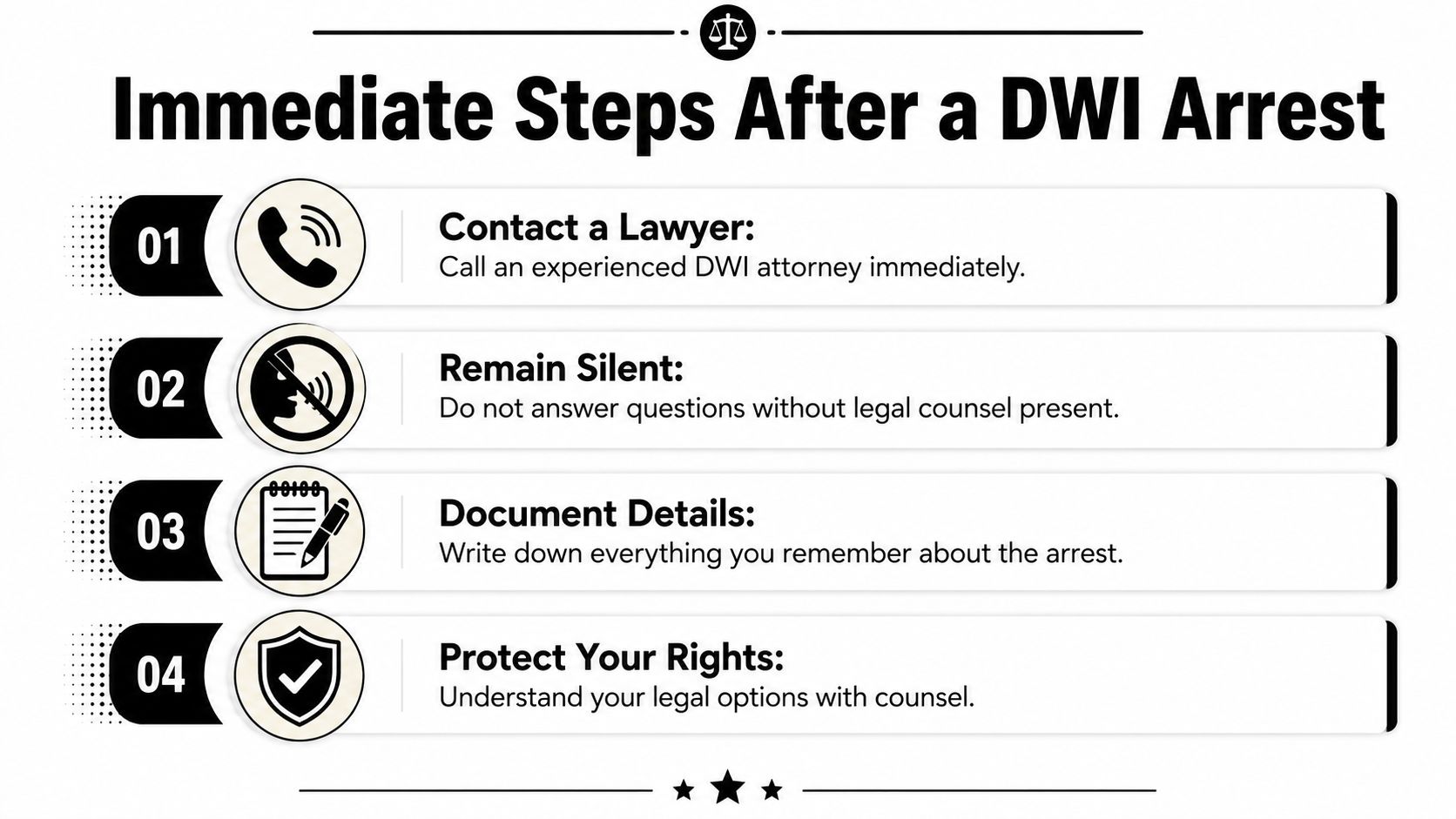
- Calendar the deadline today. Count 15 days from the date of arrest and put it in your phone, your planner, and a note on the fridge. If your case involves a refusal or failed test, that hearing request can affect whether your license is suspended.
- Write your timeline while it's fresh. Start with where you were, what you ate, what you drank, when you left, where the officer stopped you, what was said, whether you did field tests, and whether there was body cam, dash cam, or a blood draw.
- Collect every paper. Keep your bond paperwork, citation, notice of suspension, tow sheet, jail release papers, and any receipt that helps reconstruct your evening.
- Start calling lawyers, not cousins. You need case-specific advice from someone who handles DWI cases and knows Montgomery County.
- Stop talking about the facts. Don't discuss the stop with friends, coworkers, your ex, or social media. Talk only with a lawyer or potential lawyer.
Why these steps matter
The ALR side of the case moves on its own track. People often focus only on the court date and ignore the license problem until it's too late. That's backwards. Your ability to drive affects work, school pickups, probation compliance, and daily life in The Woodlands, Spring, Conroe, and Magnolia.
Your notes matter because memory fades fast. Small details often become important later. Where the patrol car was positioned, whether the officer repeated instructions, whether there was traffic, whether you have a medical condition, whether your shoes were unstable, whether you were tired after a long shift. Those facts can matter.
If you can't remember something, don't guess. Write “I don't remember” and move on.
First-day mistakes to avoid
A bad first day creates avoidable problems. Don't clean out your phone. Don't delete texts. Don't “practice” your explanation with other people. Don't assume that because it's your first arrest the judge will just toss it out. And don't hire a lawyer based only on a cheap fee quote.
If you want a simple standard, use this one: make every choice with the assumption that a prosecutor may eventually hear about it.
Understanding Your DWI Charge in Texas
Texas treats DWI as more than “I had a drink and got stopped.” Under Texas Penal Code Chapter 49, the issue is intoxication while operating a motor vehicle in a public place. For many people, the shock comes from learning that the State may claim intoxication based on alleged loss of normal use of mental or physical faculties, not just a number on a machine.
For a first-time DWI in Texas, the charge is generally a Class B misdemeanor with a maximum $2,000 fine, up to 180 days in county jail, and up to a 1-year driver's license suspension. If the breath or blood alcohol concentration is alleged to be 0.15% or higher, it can be enhanced to a Class A misdemeanor with up to a $4,000 fine and up to 1 year in jail, as summarized in this Texas DWI penalties discussion.
Sarah's dinner in Market Street
Sarah lives in The Woodlands, met friends for dinner in Market Street, and drove home thinking she was fine. She wasn't weaving all over the road. She wasn't involved in a crash. She still ended up in handcuffs after a stop, roadside testing, and a trip for booking.
That scenario is common. Normal night. Familiar route. Bad judgment about whether it was safe to drive.
Why “I felt okay” isn't a defense by itself
Your personal sense that you were okay to drive doesn't decide the case. The evidence might include officer observations, video, statements you made, field sobriety testing, breath results, or blood testing. Some cases also involve medication or combinations of substances. If that might apply, it's worth understanding the dangers of mixing Adderall and alcohol, because combination-use cases often look different from simple alcohol-only cases.
What this can affect outside criminal court
A DWI charge can spill into family and property issues. In family cases, courts focus on the child's best interest under the Texas Family Code. If there's an active custody dispute, recent alcohol-related conduct can become part of the conversation about possession schedules, exchanges, or temporary orders. If someone dies without a will after a crash-related event, estate administration issues may also arise under the Texas Estates Code.
That doesn't mean every DWI arrest wrecks a family case. It means you should treat it as a legal event with consequences beyond one courtroom.
Navigating the Montgomery County Court System
Local procedure matters. A misdemeanor DWI from The Woodlands usually doesn't feel local once the case starts because you'll be dealing with the county system, not the neighborhood where the stop happened. According to this overview of Montgomery County criminal court procedures, Montgomery County Courts at Law handle Class A and Class B misdemeanors such as DWI, while District Courts handle felonies.
That distinction tells you where the case belongs and what kind of court process you're facing.
Where your case is likely headed
For a standard first-offense misdemeanor DWI, expect county-level handling rather than a district court felony track. That means your lawyer needs to know how those misdemeanor courts operate in practice, not just what the statute says on paper.
A lot of clients think “court is court.” It isn't. The pace, preferences, scheduling, and negotiation style can vary a lot by county.
Why Montgomery County procedure changes strategy
One local wrinkle that people often miss is the relationship between early procedural choices and later record-cleanup options. Some content online makes nondisclosure sound automatic after the case ends. It isn't. One source discussing Texas DWI questions notes that 68% of Texas DWI defendants incorrectly assume expungement or nondisclosure is automatic and also points to a 2-year waiting period for nondisclosure in this context, along with common confusion about how local procedure affects timing, in Jed Silverman's discussion of questions to ask a Texas DWI attorney.
I'm cautious with broad cleanup promises. You should be too. Record relief depends on the exact outcome and the exact steps taken early.
The best time to think about future record consequences is at the start of the case, not after a plea is already done.
A practical court view for families
If your DWI case overlaps with divorce, custody, or support issues, it helps to understand how those cases move through local courts too. Montgomery County Family Courts A Local Guide is a factual resource on how family law cases proceed in Montgomery County courts serving The Woodlands.
That matters because timing collisions happen. A criminal court setting, a family court hearing, and a license problem can all hit at once. Good planning prevents one problem from causing unseen detriment to another.
How to Choose the Right DWI Lawyer in The Woodlands
You do not need the lawyer with the loudest ad. You need the one who can tell you, on the first call, what happens next in Montgomery County, what deadline matters first, and what evidence needs to be locked down before it disappears.
The Woodlands has no shortage of DWI defense options. Avvo's directory for The Woodlands DUI and DWI lawyers shows a crowded local market with plenty of attorneys and reviews. That makes one thing clear. A polished website means very little. Local court experience, a clear plan, and direct answers matter more.

Start with this question: does the lawyer know how DWI cases move through Montgomery County, or are they giving you generic Texas criminal defense talk? Those are not the same thing. A lawyer handling these cases regularly should be ready to discuss local court settings, ALR timing, blood or breath evidence, and how early decisions can affect later nondisclosure questions for a Woodlands resident.
Questions I'd ask before hiring anyone
- How often do you handle DWI cases in Montgomery County? Ask for a straight answer. You want someone who appears there regularly and knows the court process in this county.
- What is your immediate plan for my driver's license issue? A vague answer on ALR is a bad sign.
- What evidence do you request first? The right answer usually includes video, reports, testing records, maintenance logs when relevant, and a timeline of police contact.
- Who handles my court appearances and my calls? Some firms sign the case, then pass it off.
- How do your fees work? Ask what stages are covered, what trial costs extra, and whether expert witnesses are separate.
Credentials matter. Trial experience matters more. Local fit matters most.
You may see lawyers advertising board certifications, awards, and statewide recognition. Fine. Those credentials can reflect serious DWI work. They still do not answer the practical question you should care about most: can this lawyer explain your case in plain English and give you a concrete plan for Montgomery County, starting now?
For readers comparing legal options more broadly, the firm also maintains a local criminal defense lawyer page for The Woodlands that outlines the category of representation available.
Watch how the lawyer explains the process
A strong consultation should calm the situation down. By the end of the call, you should know the next deadline, the next court step, what not to do, and what documents to send over. You should also hear what cannot be promised. Any lawyer guaranteeing dismissal before reviewing the stop, the reports, and the testing evidence is selling confidence, not judgment.
This overview may help you frame the conversation:
One more practical point. A DWI arrest can spill into your job search, professional reputation, and family life fast. If online coverage or a mugshot becomes part of the problem, you can find RepErase guidance on article removal as a general reputation-management resource.
If your DWI case may intersect with divorce or custody issues, The Law Office of Bryan Fagan is one factual local option to review for family law and probate matters in The Woodlands and Montgomery County. That can matter when a criminal case starts affecting possession schedules, conservatorship disputes, or divorce strategy.
Common Defenses and Potential Long-Term Consequences
A DWI arrest is not a conviction. The defense starts by testing every link in the State's chain. Was the stop legal? Were the field sobriety tests explained and administered correctly? Was the breath or blood testing handled properly? Did the officer's report match the video?
Those aren't technicalities. They are the case.
Where defenses often begin
Some defenses attack the stop itself. Others attack how the evidence was gathered. In repeat-offense situations, charging language can also matter because Texas treats prior DWI convictions as jurisdictional priors that must be written into the charging documents and may be read to the jury, as discussed in this explanation of Texas DWI felony enhancement issues.
That kind of rule can change plea posture, trial risk, and sentencing exposure fast.
Long-term consequences people overlook
A bad plea can follow you long after the court date is over. Employers may care. Licensing boards may care. Family courts may care. Your online reputation may also become part of the damage control if an arrest story or mugshot circulates. If that becomes an issue, you can find RepErase guidance on article removal as a general reputation-management resource.
A rushed plea often feels efficient in the moment. It can become expensive for years.
Some cases resolve through reduction or negotiated outcomes. In other cases, the right move is to fight harder. That decision should come after review of the evidence, not out of embarrassment.
A DWI conviction can spill into family court. In a divorce settlement or a child custody dispute in Montgomery County, alcohol-related conduct may become relevant to conservatorship, possession terms, or the court's view of day-to-day judgment under the Texas Family Code.
Take Control of Your Case Today
If you were arrested for DWI in The Woodlands, don't waste the next week hoping the problem shrinks on its own. It won't. The right response is quick, organized, and local. Save your paperwork. Write your timeline. Stop talking about the facts. Get legal advice from someone who understands Montgomery County procedure.
You don't need false reassurance. You need a plan.
Your short version
- Protect the license issue immediately
- Preserve your memory and documents
- Choose a lawyer based on local DWI experience, not panic
- Think beyond the criminal charge if family or probate issues are already in play
If you're trying to decide your next move, start by setting up a confidential conversation through the firm's contact page for The Woodlands. A short consultation can tell you whether the problem is narrower than you fear, or broader than you realized.
This article is for educational purposes only. It is not legal advice and does not create an attorney-client relationship.
If you're dealing with a DWI arrest that may also affect divorce, custody, child support, or probate issues in Montgomery County, consider scheduling a consultation with The Law Office of Bryan Fagan. The firm works with families in The Woodlands and surrounding communities and can help you understand how one legal problem may affect the others.
