
A temporary orders hearing in a Montgomery County divorce is your first and most important day in court. This hearing sets the initial ground rules for custody, child support, who pays the bills, and who stays in the house while your divorce is pending. While the orders are called "temporary," they create a new normal that heavily influences your final divorce decree.
For anyone going through a divorce in The Woodlands, Conroe, or anywhere in Montgomery County, understanding this hearing is critical. It’s a fast-paced, high-stakes event where a judge makes binding decisions. Let’s break down what you can expect.
What is a Temporary Orders Hearing?
Think of a temporary orders hearing as the court's way of establishing stability during a chaotic time. It’s not a final trial. Instead, it’s a short hearing where a judge in Conroe, Texas, listens to both sides and makes immediate rulings on the most pressing issues.
The court’s goal is to keep the peace and ensure children are cared for while the divorce proceeds. These hearings move quickly, sometimes lasting less than an hour, so being prepared is non-negotiable.
Key Issues Decided at the Hearing
A judge will focus on immediate needs, not the entire divorce. Here’s what they’ll decide:
- Child Custody & Visitation: The judge will name a primary parent, set a possession schedule, and often establish a geographic restriction limiting where the children can live (usually Montgomery County and its surrounding counties). Every decision is guided by the "best interest of the child" standard from the Texas Family Code.
- Child Support & Medical Support: One parent will be ordered to pay temporary child support based on state guidelines. The judge will also decide who must provide the children’s health insurance.
- Spousal Support: If one spouse cannot meet their "minimum reasonable needs" financially, a judge may order temporary spousal support to bridge the gap during the divorce.
- Use of Property: Practical matters like who stays in the family home and who drives which car are settled here. The goal is to minimize disruption.
- Payment of Bills: To protect the couple’s credit and assets, the judge will assign responsibility for paying the mortgage, car payments, and other shared debts.
- Temporary Restraining Orders (TROs): It's common for a judge to issue orders preventing either spouse from draining bank accounts, selling property, or taking the kids out of the area without permission.
Real-World Scenario: A couple in The Woodlands is separating. The wife, a stay-at-home mom in the Village of Panther Creek, is worried about paying the mortgage and daily expenses. At the temporary orders hearing, her attorney presents their financial records. The judge orders the husband to pay temporary child and spousal support, gives the wife exclusive use of the family home for now, and freezes their joint investment accounts. This gives her the stability she needs while the rest of the divorce is negotiated.
The temporary orders hearing sets a powerful precedent. The arrangements put in place now often become the blueprint for the final divorce decree because they establish a new status quo. This is why a contested divorce in The Woodlands feels much more manageable once these clear rules are in place.
What to Do Next Checklist:
- Talk to an Attorney: Find a family lawyer who knows the Montgomery County courts. Do not delay.
- Gather Financials: Collect your last two years of tax returns, recent pay stubs, and current bank and credit card statements.
- Create a Budget: Make a realistic list of your and your children’s monthly expenses.
- Propose a Custody Schedule: Think through a practical possession schedule that is genuinely good for your kids.
- Document Everything: Keep a simple journal of key events and conversations with your spouse.
Disclaimer: This article provides general information and is not a substitute for legal advice. Divorce laws are complex, and you should consult with a qualified attorney about the specifics of your case.
Facing a temporary orders hearing is intimidating, but preparation is key. If you need help preparing for your hearing in The Woodlands or greater Montgomery County, our team is ready to help you build a solid strategy.
Gathering the Right Evidence for Your Hearing
In a fast-paced temporary orders hearing in a Montgomery County divorce, hard evidence is what persuades a judge. While your testimony tells your story, organized documents provide the concrete proof a judge needs to make immediate, enforceable rulings.
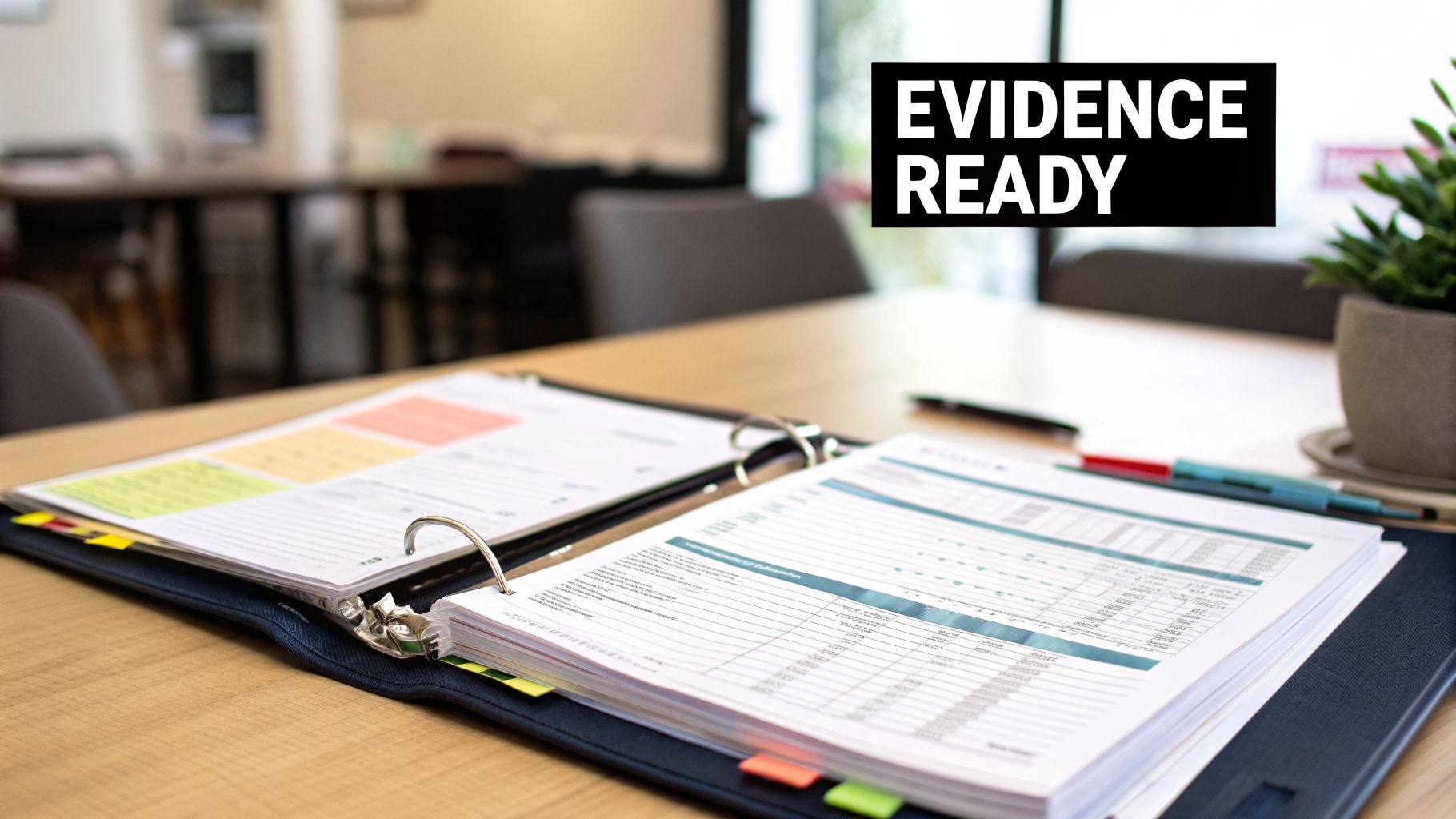
Judges in Conroe have packed dockets and limited time. They are far more likely to be influenced by someone who presents clear, well-organized information. A binder with neatly tabbed documents is more effective than fumbling through a messy stack of papers.
Financial Documents Are Non-Negotiable
The most important financial document is the Financial Information Statement (FIS). This is a sworn statement that forms the basis for all financial decisions, from child support to who pays the mortgage. The evidence you gather is what you'll use to complete this form accurately.
Start gathering these key documents now:
- Proof of Income: Your last two months of pay stubs and last two years of tax returns (including W-2s and 1099s). This is the foundation for calculating child support under the Texas Family Code guidelines.
- Bank Records: Three to six months of statements for all checking and savings accounts (personal and joint). This shows cash flow and spending habits.
- Debt Statements: Recent credit card statements, mortgage statements, and car loan documents. This illustrates your family's monthly expenses.
- Asset Information: Recent retirement account statements (401k, IRA) and investment account statements. This provides a snapshot of the marital estate that needs to be protected.
Evidence That Speaks for Your Children
When children are involved, a judge’s focus shifts to their well-being. Your evidence must show the judge that your proposed plan is in your child's best interest. You need to paint a picture of your consistent involvement in their daily lives.
Real-World Scenario: A father from The Woodlands wants a 50/50 possession schedule. His attorney helps him prepare a binder with printouts of texts with his child’s coach, a calendar showing he takes the child to dentist appointments, and a summary of the homework help he provides nightly. This tangible proof demonstrates he is an actively involved parent, which is what a Montgomery County judge needs to see.
Focus on documentation that proves your role as a hands-on caregiver, such as:
- Emails with teachers and attendance sheets showing you handle drop-offs.
- Receipts and appointment confirmations for doctor visits.
- Schedules and sign-up forms for extracurricular activities.
- Text messages or emails with your spouse about the kids. Co-parenting apps like AppClose or OurFamilyWizard can be great for this.
What to Do Next Checklist:
- Create an Evidence Binder: Get a three-ring binder with tab dividers. Each tab should correspond to a single piece of evidence.
- Make Copies: Prepare at least three copies of your binder: one for the judge, one for the opposing side, and one for you.
- Finalize Your FIS: Work with your attorney to complete your Financial Information Statement accurately using the documents you gathered.
- Write Your Story: Prepare a concise summary of what you are asking the judge for and why, backed by your evidence.
Disclaimer: This article provides general information and is not a substitute for legal advice. Divorce laws are complex, and you should consult with a qualified attorney about the specifics of your case.
Preparing evidence demands careful attention. If you feel overwhelmed or need guidance presenting the strongest case possible, our team can help you gather and organize everything you need.
What Happens After the Hearing?
Leaving the Montgomery County courthouse after your temporary orders hearing can bring a wave of relief. You finally have a set of rules for custody and finances. But the work isn't over. Your next step is to turn the judge's spoken words into an ironclad, enforceable written order.

From Verbal Ruling to Written Order
The judge will assign one of the attorneys to draft the written "Temporary Orders." Your lawyer will either write it or carefully review the other side’s draft to ensure it perfectly reflects the judge's rulings.
This is a critical checkpoint. Even small changes in phrasing can alter your rights. You must personally confirm that the possession schedule, support amounts, and financial duties are exactly as you heard them in court. Once both attorneys agree on the language, the document goes to the judge for a signature, making it official.
Real-World Scenario: A mother from Conroe left her hearing believing she was awarded a specific holiday schedule. The other attorney’s draft used vague language that left exchange times open to interpretation. Her lawyer immediately caught the issue, insisted on using the exact dates and times the judge had ordered, and prevented a future source of conflict.
Your Action Plan After the Hearing
With a signed order, it's time to shift from legal strategy to practical life. The order is your roadmap for co-parenting and managing your finances while the divorce proceeds. Following it consistently creates stability, which judges look for when making final decisions later.
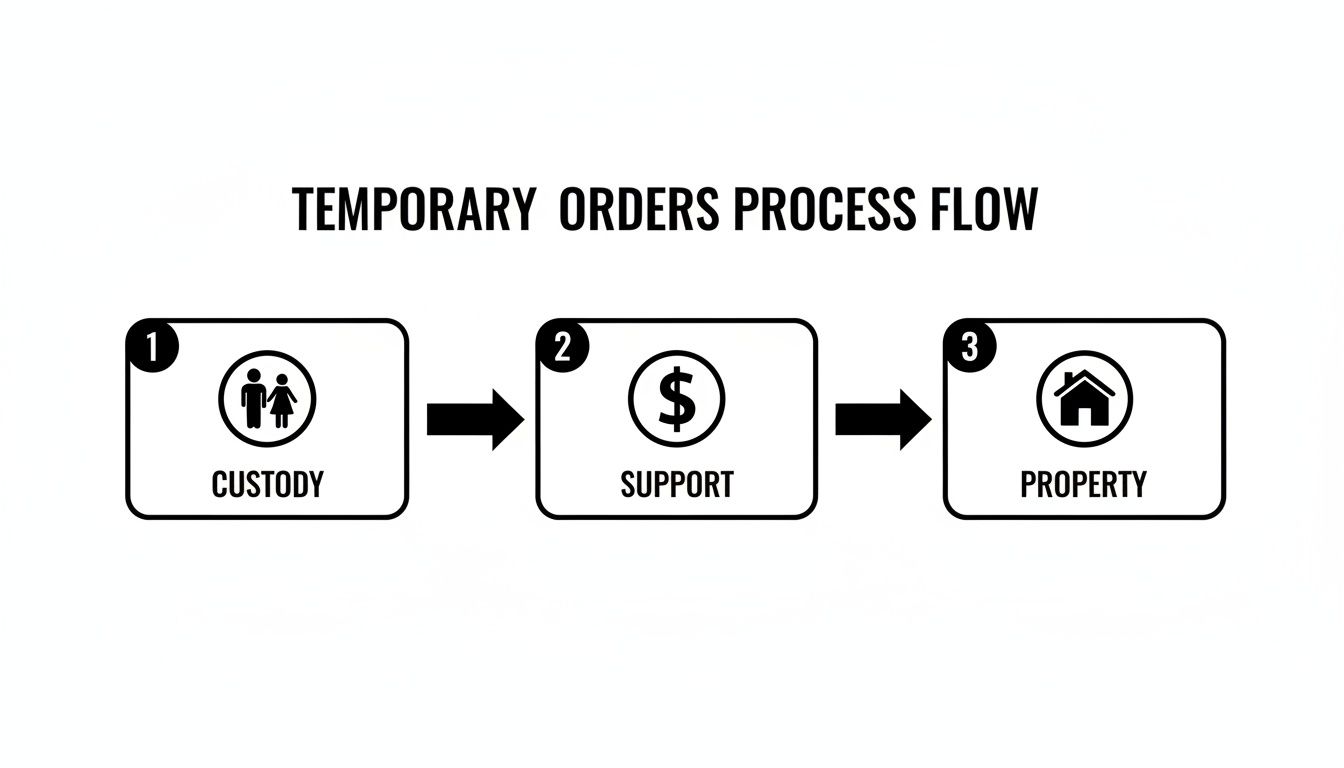
This flowchart shows the key areas a judge will focus on during the hearing.
What to Do Next Checklist:
- Get a Certified Copy: As soon as the judge signs the order, get a certified copy from the District Clerk's office in Conroe. You'll need it for banks, schools, and more.
- Update Your Budget: Rework your personal budget to reflect the new child support, spousal support, and bills you are now responsible for paying.
- Follow the Custody Order: Start following the possession schedule to the letter. Use a co-parenting app to manage the calendar and communicate.
- Prepare for Discovery: The next phase is "discovery," the formal exchange of information. Begin gathering the financial records your attorney will need for the final trial.
Disclaimer: This article provides general information and is not a substitute for legal advice. Divorce laws are complex, and you should consult with a qualified attorney about the specifics of your case.
The time after a temporary orders hearing is about execution and preparing for what’s next. If you have questions about your new orders or need strategic guidance for the next phase of your case, we can help.
Answering Your Top Questions About Temporary Orders Hearings
If you're heading to the Conroe courthouse for a temporary orders hearing, you probably have a lot of questions. Let's walk through some of the most common concerns.
How Long Does a Temporary Orders Hearing Usually Last?
Not long. Most hearings for a temporary orders hearing in a Montgomery County divorce are set for 20 to 60 minutes per side. Judges have packed dockets and move quickly. This is why preparation is everything—you must make every minute count. Your attorney’s job is to present the most important information concisely.
Can I Bring Witnesses to Testify for Me?
Yes, but you must be strategic. With such a tight timeframe, your own testimony is almost always the most important. You won't have time for a long line of witnesses. An experienced attorney can help you decide if one key witness—like a teacher or a CPA—is worth using a few of your precious minutes on. Often, well-organized documents are more powerful than a witness.
What Happens if My Spouse Violates the Temporary Orders?
Once the judge signs the temporary orders, they are not suggestions—they are legally binding. If your spouse ignores them, you can file a Motion for Enforcement. This motion tells the judge that your spouse is breaking the rules.
The Texas Family Code gives judges serious power to enforce their orders, including fines, ordering payment of your attorney's fees, or even jail time for serious violations. Keep a detailed log of every violation to use as evidence.
Real-World Scenario: The judge orders Dad to pay child support by the 1st of the month. He pays on the 15th for two months, causing Mom to get hit with late fees on her rent. She files a Motion for Enforcement with proof of the late payments. The judge can order Dad to pay on time, reimburse Mom for her late fees, and pay her attorney's fees for having to file the motion.
Are the Decisions Made at This Hearing Permanent?
Technically, no. The orders are temporary and only last until the divorce is final.
However, they have a massive impact on the final outcome. These orders create the "status quo." If a custody schedule works well for six months, a judge will be reluctant to change it unless there's a very good reason. This is why you cannot treat the temporary orders hearing as just a preliminary step. It often sets the stage for the rest of your case.
Disclaimer: This article provides general information and is not a substitute for legal advice. Divorce laws are complex, and you should consult with a qualified attorney about the specifics of your case.
Facing a temporary orders hearing is daunting, but preparation is your best defense. If you have questions or need to discuss your divorce case in The Woodlands or Montgomery County, please contact our office to schedule a consultation.