
If you are a grandparent in Montgomery County being kept from your grandchildren, the situation can feel heartbreaking and hopeless. It's important to understand that Texas law starts with a strong presumption: fit parents have the right to raise their children as they see fit. This includes deciding who gets to see them.
This means you don't have an automatic legal right to see your grandchildren. However, under specific, narrow circumstances defined in the Texas Family Code, you may be able to ask a court for help.
Understanding Your Rights as a Grandparent in Montgomery County

Whether you live in The Woodlands, Conroe, or another part of the county, you can't simply go to the courthouse and ask a judge for visitation because you miss your grandchildren. To even get your foot in the courthouse door, you must first clear a major legal hurdle called “standing.”
Standing is your ticket to file a lawsuit. Without it, a Montgomery County court won't even listen to your case, no matter how loving and involved you have been.
This strict approach is rooted in the U.S. Supreme Court case Troxel v. Granville, which reinforced parental rights. In response, the Texas Family Code lays out very specific situations that allow a grandparent to file a lawsuit against a parent’s wishes. Learn about the impact of the Troxel decision on Texas law.
What Can You Legally Ask For?
In a "grandparents' rights" case, you are typically asking a Montgomery County court for one of two things: visitation or custody. In Texas legal terms, these are called "possession and access" and "conservatorship." They are very different and have separate legal requirements.
Seeking visitation is a challenge. Seeking full custody is an even steeper climb, usually reserved for serious situations where a child's safety is at risk.
Table: Visitation vs. Custody in Texas
| Legal Goal | What You're Asking For | Key Legal Standard | Common Scenario |
|---|---|---|---|
| Visitation | A court-ordered schedule to see your grandchild ("Possession and Access"). | You must prove that denying you access would significantly impair the child’s physical health or emotional well-being. | Your child (the grandchild's parent) has passed away, been incarcerated, or had their parental rights terminated, and the other parent is now cutting off all contact. |
| Custody | The legal right to have the child live with you and make major decisions for them ("Conservatorship"). | You must prove the child's current home presents a serious, immediate danger to their physical or emotional well-being. | The child's parents are dealing with severe substance abuse, have abandoned the child, or are engaging in abuse or neglect. |
Both options require you to prove that the child is facing real harm, not just that you are a wonderful grandparent who misses them.
Real-World Scenario
Imagine a grandmother living in a Sterling Ridge neighborhood in The Woodlands. Her son recently passed away, and her daughter-in-law has cut off all contact, refusing to let the grandmother see her grandchildren. The grandmother is genuinely worried. She believes the children, reeling from the loss of their father, are now being harmed by losing their only connection to his entire side of the family. This is the kind of situation where she might have the standing to file a lawsuit for possession and access under the Texas Family Code.
A Montgomery County court will not focus on whether you are a loving grandparent. The legal question is whether denying you access would cause significant harm to your grandchild’s physical health or emotional well-being. This is an incredibly high standard to meet.
What to do next: A Quick Checklist
- Assess the Harm: Honestly ask yourself: is being denied access causing significant emotional or physical impairment to your grandchild, or is it primarily causing you sadness?
- Document Everything: Keep a detailed journal. Log every attempt to see your grandchild, save every text and email, and note any concerning behavior or statements from the parents.
- Consult an Attorney: Speak with a family law attorney who regularly practices in Montgomery County. An experienced local lawyer can tell you bluntly whether you have a realistic chance of proving you have standing to file a case.
If you are a grandparent in The Woodlands, Conroe, or anywhere in Montgomery County worried about your relationship with your grandchildren, understanding your specific legal options is the critical first step.
How to Qualify for Grandparent Visitation in Texas
Getting court-ordered time with your grandchildren in Texas is not easy. The law starts with a powerful principle known as the “parental presumption.”
This legal concept assumes that fit parents know what is best for their children. If a parent decides to limit or cut off contact with you, a Montgomery County judge will lean in their favor. To succeed, you must present a compelling case to overcome that presumption.
The "Significant Impairment" Hurdle
To get a court to step in, you must prove that the parent's decision is not just unfair, but that it is actively harming your grandchild.
The Texas Family Code is very specific. You must show evidence that being denied “possession and access” (the legal term for visitation) would "significantly impair the child's physical health or emotional well-being."
This is the single biggest challenge you will face. "Significant impairment" is much more than your grandchild being sad or missing you. It is a legal standard that demands proof of a deep and measurable negative impact.
How Do You Prove Significant Impairment?
You must connect the dots for the judge, showing that your presence is essential for the child's well-being. A Montgomery County judge will look for powerful, persuasive evidence of harm.
Here are a few situations that might rise to that level:
- Verifiable Emotional Distress: Can a therapist, school counselor, or doctor testify that your grandchild is showing signs of severe anxiety, depression, or serious behavioral issues that started after you were cut out of their life?
- You Were a Primary Caregiver: If you were the one taking the child to school, helping with homework, and tucking them in at night, a sudden stop to that relationship can create a destabilizing and harmful loss.
- You Are the Link to a Deceased Parent: If your own child has passed away, you represent a connection to that entire side of their family. A court may see severing that link as damaging to the child's identity and emotional health.
To learn more about these requirements, you can discover more insights about these legal requirements in Texas. When family dynamics are tense, a judge might also consider ordering supervised visitation in The Woodlands.
What to do next: A Practical Checklist
- Gather Proof of Harm: Collect anything that shows the child is struggling. This could be emails from a teacher, notes from a doctor, or texts documenting behavioral changes.
- Document Your Bond: Show the judge you were close. Put together photos, calendars, and receipts that create a timeline of your consistent involvement in the child's life before the conflict.
- Identify Witnesses: Would a neighbor, friend, or clergy member be willing to provide a statement about the bond you share and the negative changes they've seen in the child?
- Speak with a Local Attorney: A family lawyer who practices in the Conroe courthouse can give you an honest assessment of your chances based on your evidence.
Proving significant impairment is a difficult, uphill battle. It requires a thoughtful and strategic legal approach.
When Can a Grandparent Seek Custody of a Grandchild?
Asking a court for visitation is one thing. Asking to take over full legal custody—what Texas law calls "conservatorship"—is a much bigger challenge. This is a step taken only when a child's safety and well-being are on the line.
For a grandparent in Conroe or The Woodlands, this means asking a judge to legally replace a parent. The standard for this is incredibly high and reserved for true family crises.
Establishing the Right to File for Custody ("Standing")
Before a judge will hear your case, you must prove you have the legal right, or "standing," to file.
The most common way for a grandparent to get standing is by showing you have already been the child's primary caregiver. Under the Texas Family Code, you have standing if you've had actual care, control, and possession of the child for at least six months. This six-month period must have ended no more than 90 days before you file your lawsuit.
Other situations that can give you standing include:
- The child’s current home presents a serious, immediate danger to their physical or emotional health.
- Both parents agree and consent to you having custody.
- A court has already ordered your involvement.
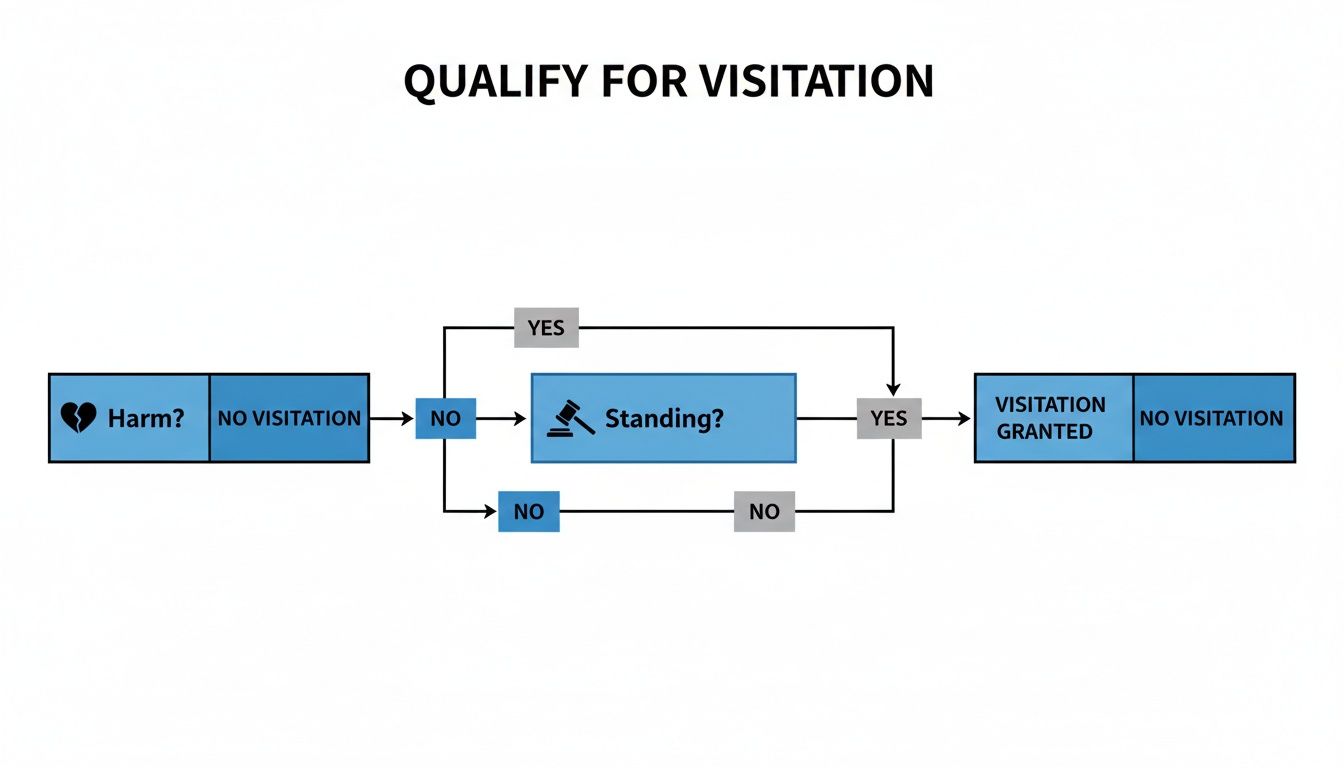
Without proving both harm and standing, your case will not move forward in a Montgomery County courthouse.
The Best Interest of the Child
Even with standing, you must clear the most important hurdle: proving that giving you custody is in the best interest of the child.
Texas courts use a list of criteria known as the "Holley Factors" to determine a child's best interest. A judge will look at:
- The child’s emotional and physical needs.
- Any danger the child faces now or in the future.
- The parenting abilities of the people seeking custody.
- The stability of the home being offered.
- The child’s own wishes (if they are 12 or older).
Your entire case must be built around these factors, using hard evidence to prove that placing the child with you is the best possible outcome. Sadly, many Texas grandparents are already raising their grandchildren without legal authority. Data shows that for every 1 child in foster care with a relative, 24 are being raised by grandparents and other kin outside the system. Find more state-specific data on grandfamilies from GrandFacts.
What to do next: A Custody Checklist
- Document Care: If your grandchild lives with you, keep a detailed log. Note the date they moved in and track everything you do for them—school paperwork, doctor visits, and daily routines.
- Preserve Evidence of Danger: If the child is in an unsafe environment, you need proof. This includes police reports, CPS records, concerning text messages, photos, and emails.
- Prepare for Scrutiny: The court will examine your life, too. Be ready to show that your home is stable, including your health, finances, and the physical safety of your house.
Seeking custody is a profound responsibility. If you believe your grandchild is in danger, it is vital to speak with an attorney who knows how to navigate the Montgomery County court system.
Building Your Case: Evidence and Strategy

To succeed in a Montgomery County courtroom, you need to present a case built on solid, convincing evidence. A judge in Conroe cannot just take your word for it. They are legally required to see proof that satisfies the high standards of the Texas Family Code.
It's all about showing, not just telling. Your goal is to paint a vivid picture for the judge that illustrates your stable, loving relationship with your grandchild.
What Evidence Matters to a Judge?
The evidence you collect must prove your critical role in the child's life. Think of each piece of evidence as a brick; enough of them, laid correctly, build an unshakable wall.
Here are the "bricks" that create a strong foundation for grandparents rights in Montgomery County, Texas:
- Written Communications: Save every text, email, and social media message between you and the parents. These conversations can establish a timeline and reveal the real reasons contact was denied.
- Photos & Videos: A collection of photos from birthdays, school plays, and simple afternoons together can be powerful in showing a consistent, loving presence.
- Financial Support: Did you help pay for daycare, school supplies, or doctor’s visits? Receipts and bank statements are concrete proof of your investment in your grandchild’s well-being.
The Power of Witnesses
Testimony from neutral, third-party witnesses can be a game-changer. Teachers, neighbors, doctors, and family friends who have seen your bond can offer compelling support.
In some cases, a Montgomery County judge may appoint an Amicus Attorney. This is a neutral lawyer whose only job is to represent the child's best interests. They will interview everyone involved and make a recommendation to the court. Being honest and cooperative with the Amicus Attorney is critical. You can read our guide on how to prepare for a child custody hearing in Montgomery County to learn more about the court process.
What to do next: A Checklist for Grandparents
- Honestly Evaluate the Harm: Can you prove that being denied access is causing significant impairment to your grandchild's physical or emotional well-being?
- Document Everything: Start a journal today. Log every attempt to connect—phone calls, texts, and visits. Note the date, time, and result. This creates a credible timeline for the court.
- Gather Your Proof: Collect photos, videos, and any records showing your deep involvement in your grandchild's life, such as receipts for medical bills, school supplies, or gifts.
- Avoid Unnecessary Conflict: Hostility toward the parents can be used against you. Keep communication calm and centered on the child's best interests.
- Seek Legal Counsel: This is the most important step. Schedule a consultation with a family law attorney who understands the Montgomery County courts. For more on what to expect, read about working with a custody attorney in Montgomery County, TX.
Disclaimer: This article provides general information and is not legal advice. The law is complex and every situation is unique. You should consult with a qualified attorney for advice regarding your individual circumstances.
Building a persuasive, evidence-based case is your best path forward. If you're a grandparent in The Woodlands, Conroe, or anywhere in Montgomery County, the next step is to discuss the specific facts of your situation. Schedule a consultation with our office to start building a strategy tailored to your family. If you're ready to understand where you stand and what to do next, schedule a consultation with our experienced team.